
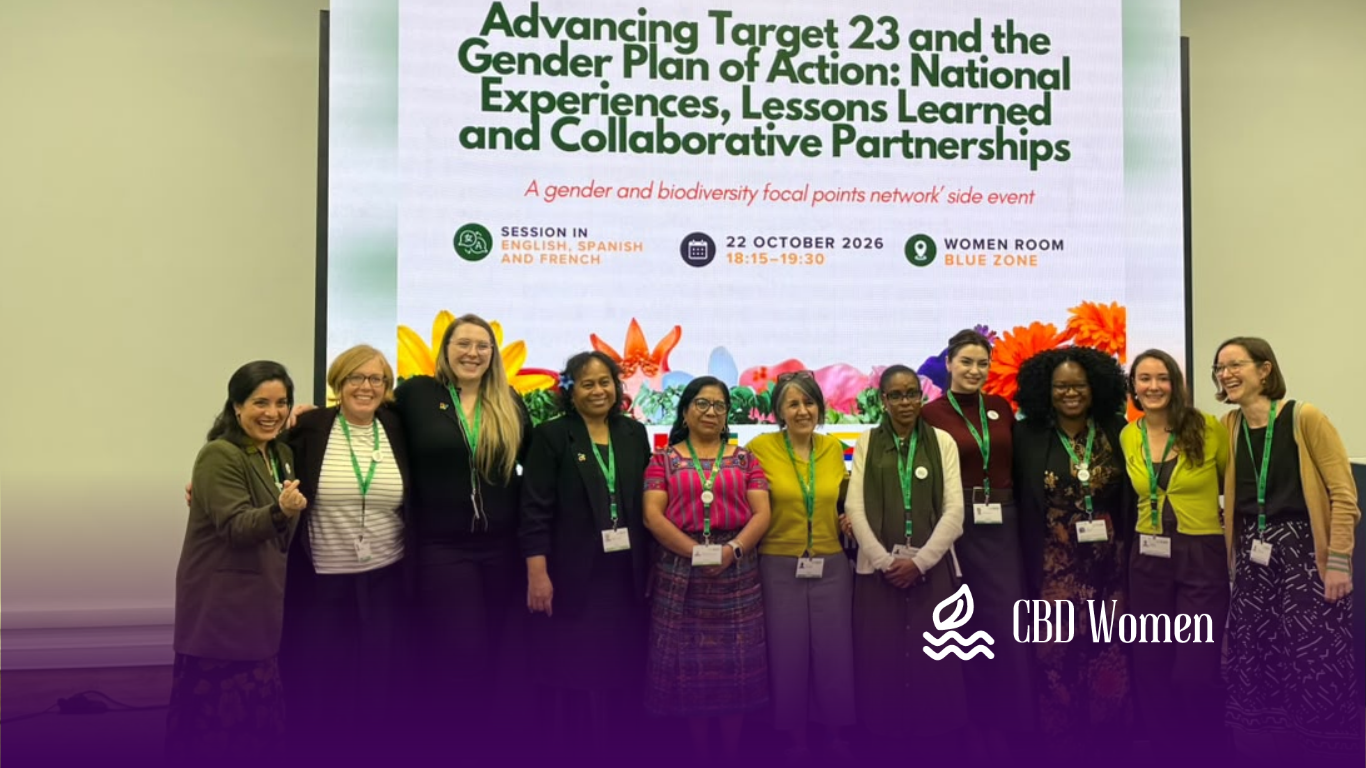
On 22 October, the Gender and Biodiversity Focal Points Network and the CBD Women’s Caucus convened a COP17 side event in Yerevan to exchange national experiences, lessons and challenges in implementing Target 23 of the Kunming-Montreal Global Biodiversity Framework and the CBD Gender Plan of Action (2023–2030).
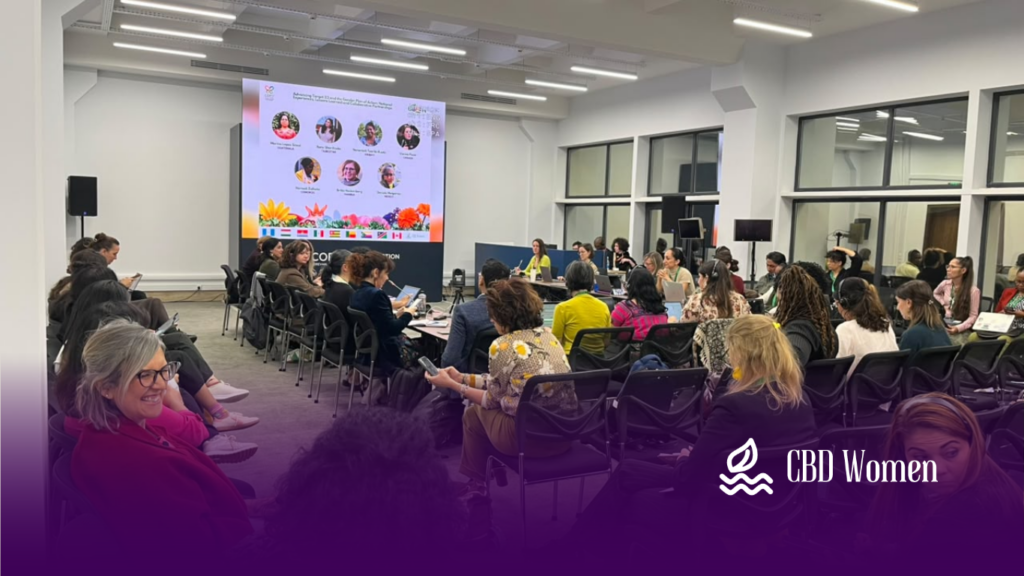
What does implementation look like in practice?
Seven Gender and Biodiversity Focal Points shared concrete initiatives, emerging results and challenges from their countries:
- Marina López Sincal (Guatemala) presented a methodological guide for integrating gender and cultural considerations into protected area management, alongside efforts to strengthen gender-responsive data and women’s leadership.
- Bonu Sharifzoda (Tajikistan) shared progress on a national roadmap for implementing the Gender Plan of Action, including institutional coordination, gender-responsive budgeting and women’s participation in natural resource management.
- Nenenteiti Teariki-Ruatu (Kiribati) highlighted women’s traditional ecological knowledge and efforts to ensure their experiences and perspectives influence biodiversity policies and community decision-making.
- Vienna Pozer (Canada) discussed gender-based analysis in biodiversity policies and financing, while highlighting persistent gaps in gender-disaggregated biodiversity data.
- Hamadi Zalhata (Comoros) shared experiences integrating gender into national biodiversity planning, supporting women-led conservation and creating spaces for women to influence community decisions.
- Britta Hackenberg (Namibia) highlighted practical barriers to women’s participation and initiatives to build a network of women biodiversity champions and support intergenerational mentorship.
- Daniela Melgarejo (Mexico) presented the integration of gender equality into Mexico’s National Biodiversity Strategy, progress in women’s agrarian rights and persistent structural inequalities.
Moderated by Amelia Arreguín Prado (CBD Women’s Caucus), the exchange highlighted common challenges across different national contexts: persistent discriminatory norms, limited financial and technical resources, barriers to meaningful participation and gaps in gender-responsive data. It also reinforced the value of peer learning and stronger institutional support for Gender and Biodiversity Focal Points.
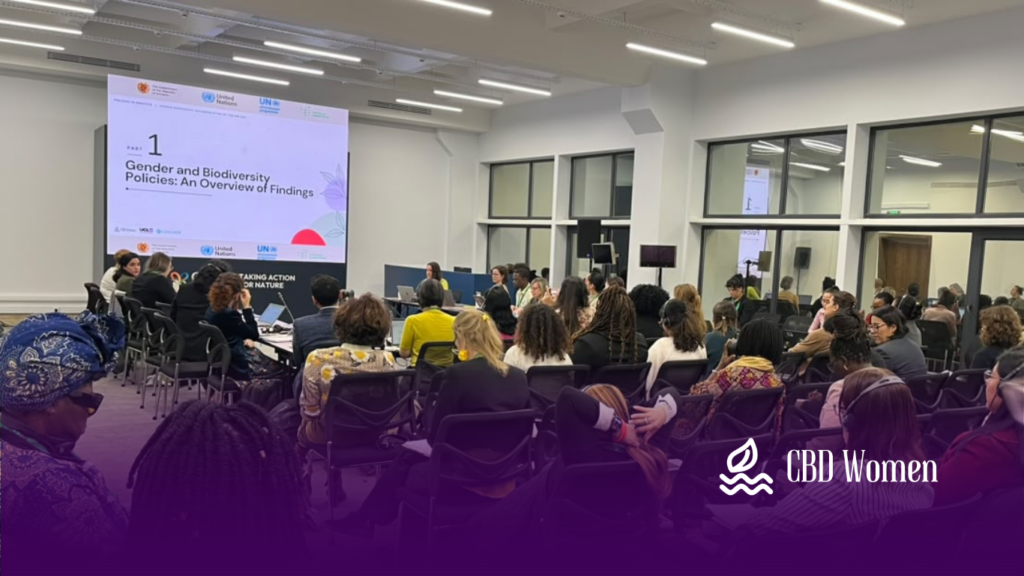
Documenting National Experiences to Inform Action Elsewhere
The event also marked the launch of Policies in Practice: Learning from National Experiences for Gender-Responsive Implementation of the Global Biodiversity Framework, developed by the CBD Women’s Caucus and University College London (UCL), with support from CASCADE. Presented by Gabriella Santini (UCL), the report draws on 10 country case studies to identify approaches for advancing women’s rights, leadership, access to resources and gender-responsive biodiversity governance.
A complementary policy brief, Strengthening the Role of Gender and Biodiversity Focal Points, was also shared, drawing on a global survey, interviews and peer exchanges to examine focal points’ experiences, challenges and priorities.
Together, the national experiences and publications underscored that implementing Target 23 and the Gender Plan of Action requires more than policy commitments: it demands adequate resources, institutional accountability, stronger evidence and women’s meaningful influence over biodiversity decisions.
Watch the full event recording and learn more about the Gender and Biodiversity Focal Points Network.