
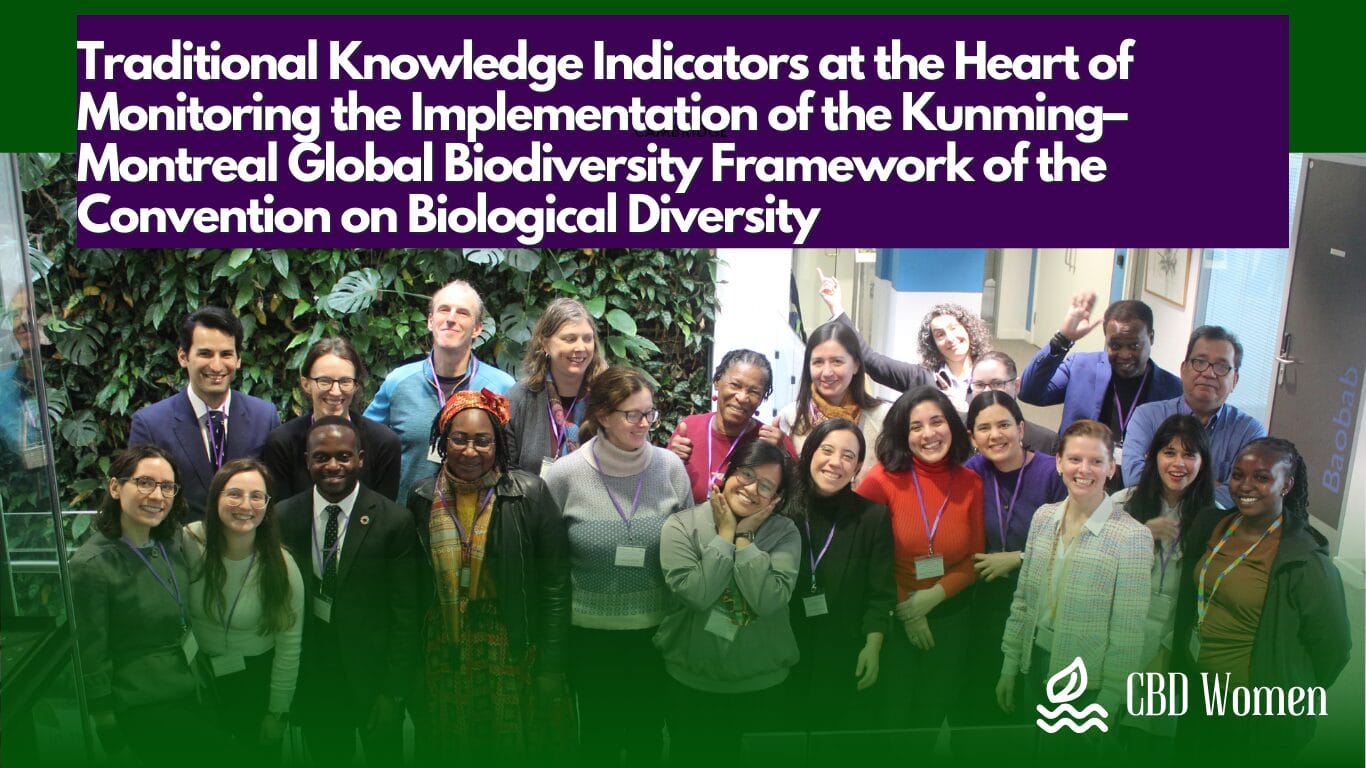
By Ms. Rose Pélagie from Cameroon
Disclaimer: The views expressed in this blog are those of the author and do not necessarily reflect the official position or opinions of the CBD Women’s Caucus
From 29 to 31 January 2026, Ms Rose Pélagie from Cameroon represented the CBD Women’s caucus and the African Women’s Network for Community Management of Forests (REFACOF) at the workshop: “Expert Workshop on Traditional Knowledge Indicators.” This workshop was co-organised by the Forest Peoples Programme (FPP) and the UN Environment Programme World Conservation Monitoring Centre (UNEP-WCMC), in collaboration with the Secretariat of the Convention on Biological Diversity (CBD).
About the event
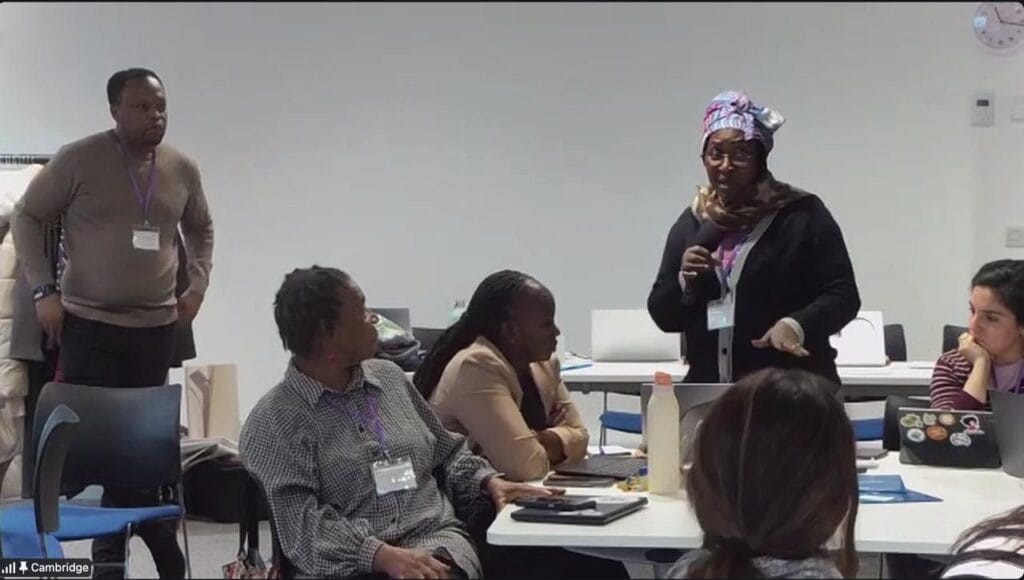
The Expert Workshop on Traditional Knowledge Indicators took place in Cambridge, England, specifically at the David Attenborough Building.
Participants included representatives from the CBD Secretariat, governments, FPP, UNEP-WCMC, the CBD Women’s Caucus, civil society organisations, Indigenous Peoples and local communities, among others.
Objective of the Workshop
The workshop aimed to share the experiences of Parties to the Convention on Biological Diversity (CBD), Indigenous Peoples and local communities regarding the use of rights-based and traditional knowledge indicators, including priorities, needs, case studies, and contributions to the 7th National Reports to the CBD.
The discussions also sought to help the CBD Secretariat and the broader community better understand what facilitates or prevents countries from taking action to use the indicators and the approach adopted under the Kunming–Montreal Global Biodiversity Framework for biodiversity monitoring.
During the meeting, an entire session was dedicated to gender considerations, particularly the integration of gender equality and the monitoring of the implementation of the Gender Plan of Action of the Kunming–Montreal Global Biodiversity Framework. This session saw strong participation from members of the CBD Women’s Caucus, who played a key role in the discussions.
"Gender Considerations in Rights-Based Monitoring and GPA Indicators,”
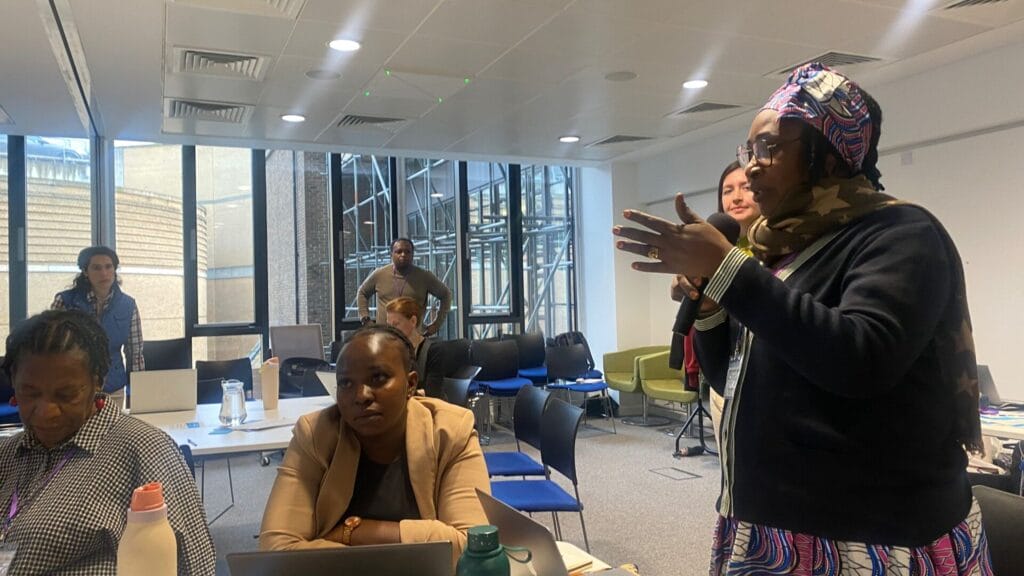
An entire session (Session 6) was dedicated to gender during the workshop. This session, titled “Gender Considerations in Rights-Based Monitoring and GPA Indicators,” saw strong participation from members of the CBD Women’s Caucus. Mis Amelia and Ms Rose participated as panelists.
Durin the GPA’s session, our coordinator, Ms. Amelia Arreguín provided an overview of the CBD’s mandate on gender equality. She also highlighted that gender was not introduced as a new issue within the KMGBF, but has been integrated into COP decisions since the adoption of the Convention. She drew attention to how gender considerations have been reflected in decisions related to agriculture, tourism, forests, protected areas, resource mobilisation, and many other areas.
Ms. Rose Pélagie highlighted the important role women—particularly African women—have long played in protecting and conserving biodiversity. She took the oportunity to share REFACOF’s experience in ecosystem restoration, the promotion of women’s rights and leadership, and women’s economic empowerment.
In addition, Ms. Rose highlighted REFACOF’s contribution to the integration of gender considerations into Cameroon’s National Biodiversity Strategy and Action Plan (NBSAP), and discussed the challenges women face in their work, as well as the opportunities created by gender-responsive monitoring at local and national levels.
Outcomes and nexts steps
Among the key recommendations emerging from the discussions were:
Strengthening awareness of traditional knowledge indicators among Parties to the Convention on Biological Diversity and within communities, through cross-sectoral collaboration and with regional and subregional technical and scientific cooperation centres.
Considering a national exploratory study on the actions of Indigenous Peoples and local communities and their links to national monitoring processes.
Organising workshops bringing together representatives of national governments, Indigenous Peoples, local communities, and researchers to identify relevant data and conduct validated data analyses.
Participants also expressed interest in jointly developing future funding proposals and sustainability mechanisms to continue advancing rights-based biodiversity monitoring, particularly through the use of indicators adopted under the KMGBF monitoring framework discussed during the workshop.
Readers are encouraged to follow the work of this group or engage in similar initiatives, and to share their comments and feedback.