
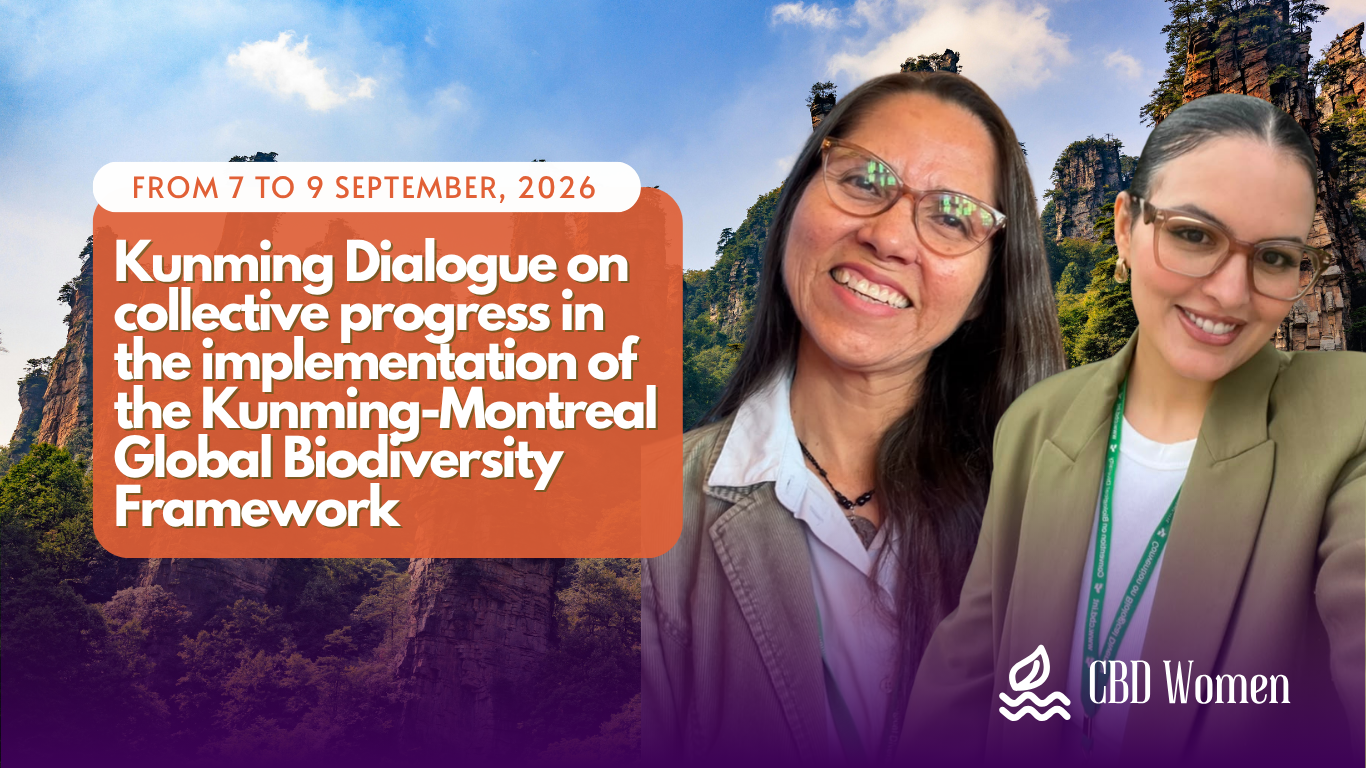
By Berta Medrano, members of the CBD Women’s Caucus, and Fátima El-aaraby, Project officer of the CBD Women’s Caucus.
Disclaimer: The views expressed in this blog are those of the author and do not necessarily reflect the official position or opinions of the CBD Women’s Caucus
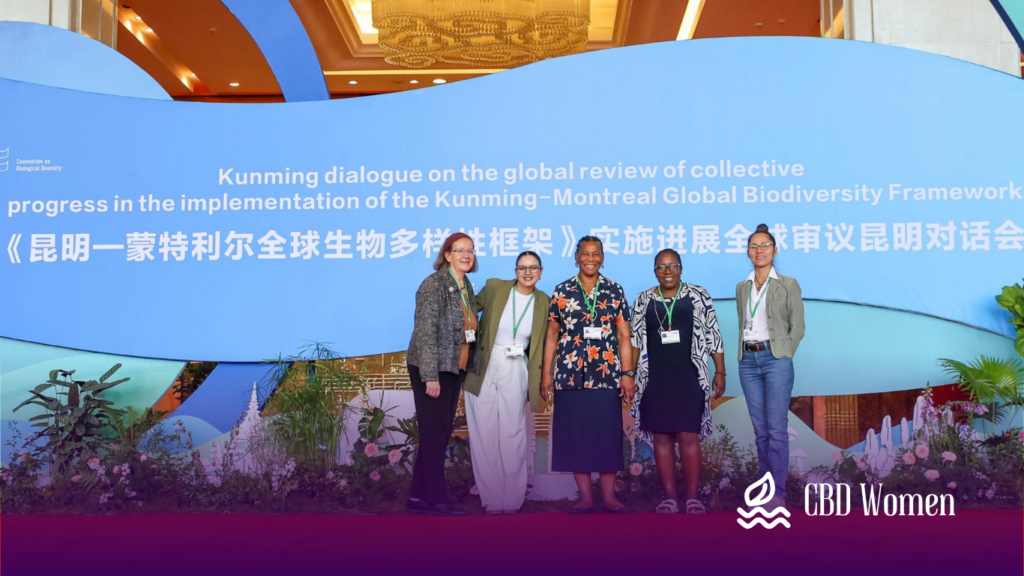
No negotiating texts, no brackets, no formal statements: the Kunming Dialogue was an open conversation. From September 7 to 9, 2026, the CBD Women’s Caucus participated in the «Kunming dialogue on collective progress in the implementation of the Kunming-Montreal Global Biodiversity Framework in support of the global review,» held in Kunming, China. Parties and stakeholders came together not as negotiators, but as people to take an honest look at where we stand on the road to 2030. The Dialogue was convened by the Secretariat of the Convention on Biological Diversity in response to a request from COP16. It was co-chaired by Huang Runqiu, Minister of Ecology and Environment of China and COP15 President, and Nathalie Provost, Secretary of State (Nature) of Canada.
The Caucus delegation included Fátima El-Aaraby from Morocco and Berta Medrano from El Salvador. They were joined by Alice Kammwamba, the Caucus representative to the Ad Hoc Scientific and Technical Advisory Group for the Preparation of the Global Report on Collective Progress in the Implementation of the Kunming-Montreal Global Biodiversity Framework (AHSTAG), whose members moderated the discussions. Caucus board members Cristina Eghenter and Ruth Spencer also took part. Cristina co-chaired the session on means of implementation, and Ruth co-chaired the session on whole-of-government and whole-of-society approaches.
Around 300 participants took part, including representatives of Parties, indigenous peoples and local communities, women, youth, academia, and the private and financial sectors, as well as experts and other stakeholders. Representatives of regional and subregional centres supporting technical and scientific cooperation also attended.
Why it mattered
The Dialogue offered an informal, technical space to discuss the global review of collective progress, within the framework of international cooperation. Its aims were to:
- develop a shared understanding of the gaps and challenges in implementing the Framework
- identify approaches to accelerate progress
- find opportunities to scale up action and support, including by fostering cooperation and whole-of-government and whole-of-society initiatives
- provide an open, inclusive platform for consensus-building on how to mobilize commitments across all of the Framework’s goals and elements, particularly the cross-cutting areas where progress is lagging most, so that no one is left behind
The outcomes of the Dialogue will inform the first global review of collective progress at COP17 in Yerevan, Armenia (19–30 October 2026).
How it worked
Discussions were organized into five thematic roundtables, each built on key messages from the draft global report on collective progress:
- scope and coverage
- action and implementation
- means of implementation
- whole-of-government and whole-of-society approaches
- data and knowledge
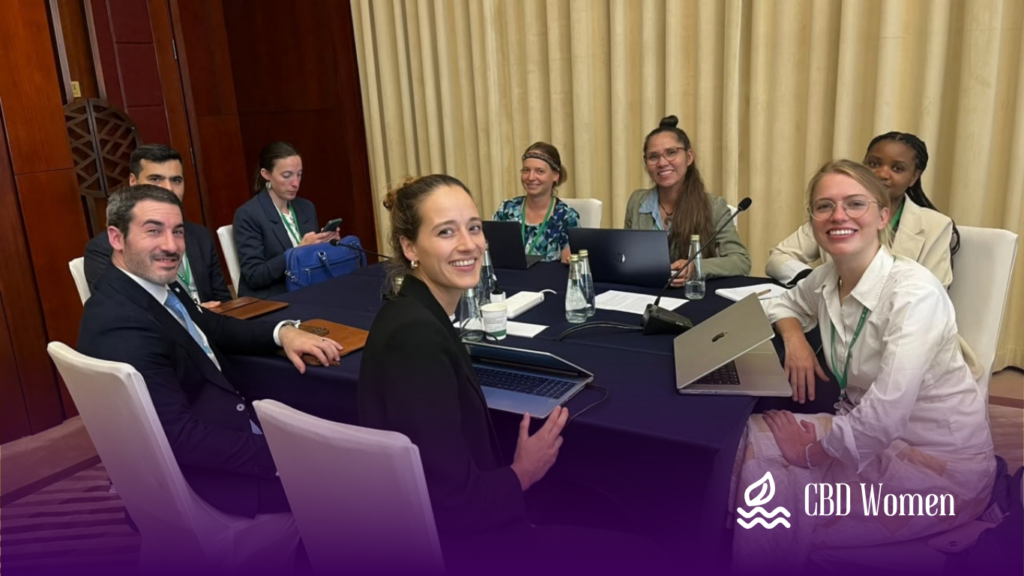
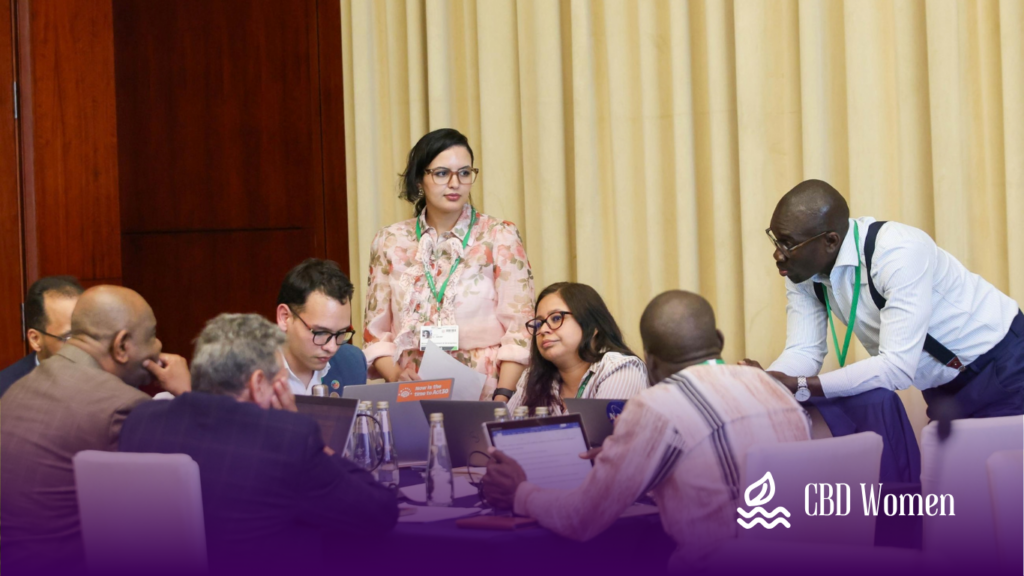
The roundtables ran in parallel, and participants moved between topics during the breaks. This format made participation inclusive, equitable and horizontal. The exchanges were empathetic, collaborative, open, honest and transparent. Just as importantly, the setting fostered deeper, more human connections between government delegates and representatives of women, youth, indigenous peoples and local communities, NGOs, academia and the private sector.
Our contribution
Our delegation participated actively and substantively in all five roundtables over three days of intensive dialogue. We drew on our knowledge and experience, shared concrete examples, and presented the Caucus’s initiatives. We also identified the gaps and needs that must be addressed to ensure women’s perspectives are reflected in the global report.
Throughout, we stayed aligned with Caucus policy. We built on key messages from our own analysis and evaluation, which we had previously submitted officially as input to the global review.
Key messages reflected in the outcomes
Across the roundtables, the discussions reflected elements the Caucus championed, including:
- mainstreaming commitments under Targets 22 and 23 into national biodiversity strategies and action plans (NBSAPs)
- using explicit language that names indigenous peoples and local communities, women and youth
- integrating rights-based and gender-responsive approaches across the board, along with the other considerations set out in Section C of the Framework
- developing an indicator system to assess social and gender dimensions, collecting both qualitative and quantitative disaggregated data
- ensuring direct, predictable and flexible access to resources for indigenous peoples and local communities, women and youth
We also repeatedly emphasized that women make an active, substantive and significant contribution to the Framework’s goals and 23 targets. That contribution must be acknowledged, made visible, reported on and integrated into global progress.
These messages are echoed in the Co-Chairs’ summary of the Dialogue (CBD/IMP/OM/2026/1/8). The summary calls for indigenous peoples and local communities, women and youth to have access to financial resources and capacity-building, so that they can engage effectively in implementation. It calls for stronger engagement of rights holders and stakeholders through the co-design and co-production of biodiversity actions, not just participation in planning and reporting. It also highlights the need to bring together diverse data and knowledge, including qualitative and quantitative data, traditional knowledge, and data from indigenous peoples and local communities, women, and youth.
What we gained
The Kunming Dialogue gave the Women’s Caucus delegation excellent visibility and positioning. It highlighted the important advocacy role the Caucus plays within the CBD and brought to light concerns shared across stakeholder groups.
The forum also allowed delegates to engage in advocacy and strategic planning, identify opportunities, and network with government representatives, youth, indigenous peoples and local communities, civil society organizations, researchers and academics.
Within the delegation, members got to know one another better and deepened their ties. They built cohesion, coordinated advocacy efforts, and identified opportunities for the wider Women’s Caucus community.
📢Reflections from Caucus members
📄 Read our full submission, » The Peer Review of the Draft Global Report on Collective Progress in the Implementation of the Kunming-Montreal Global Biodiversity Framework «: link