
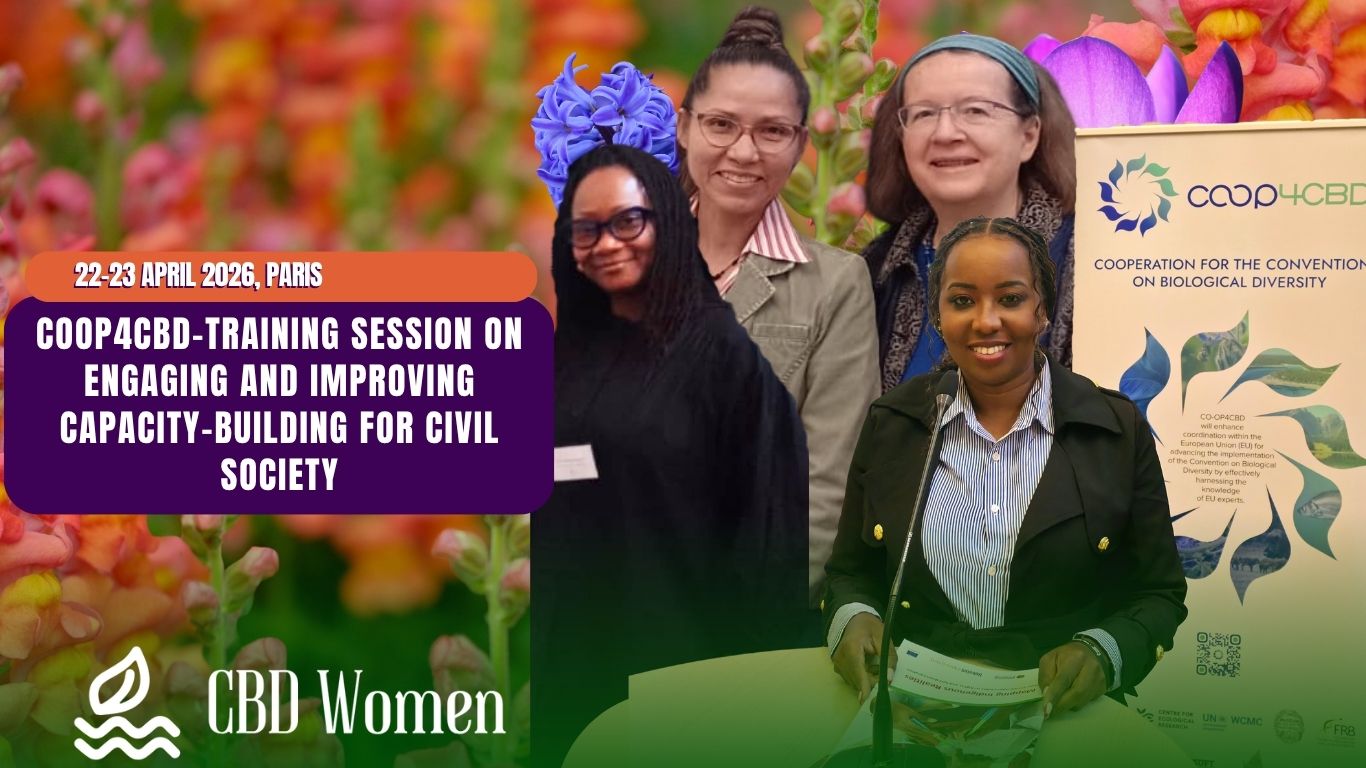
By Cristina Eghenter , Sharon Ruthia , Fatou Ndiaye and Berta Medrano, members of the CBD Women’s Caucus
Disclaimer: The views expressed in this blog are those of the author and do not necessarily reflect the official position or opinions of the CBD Women’s Caucus
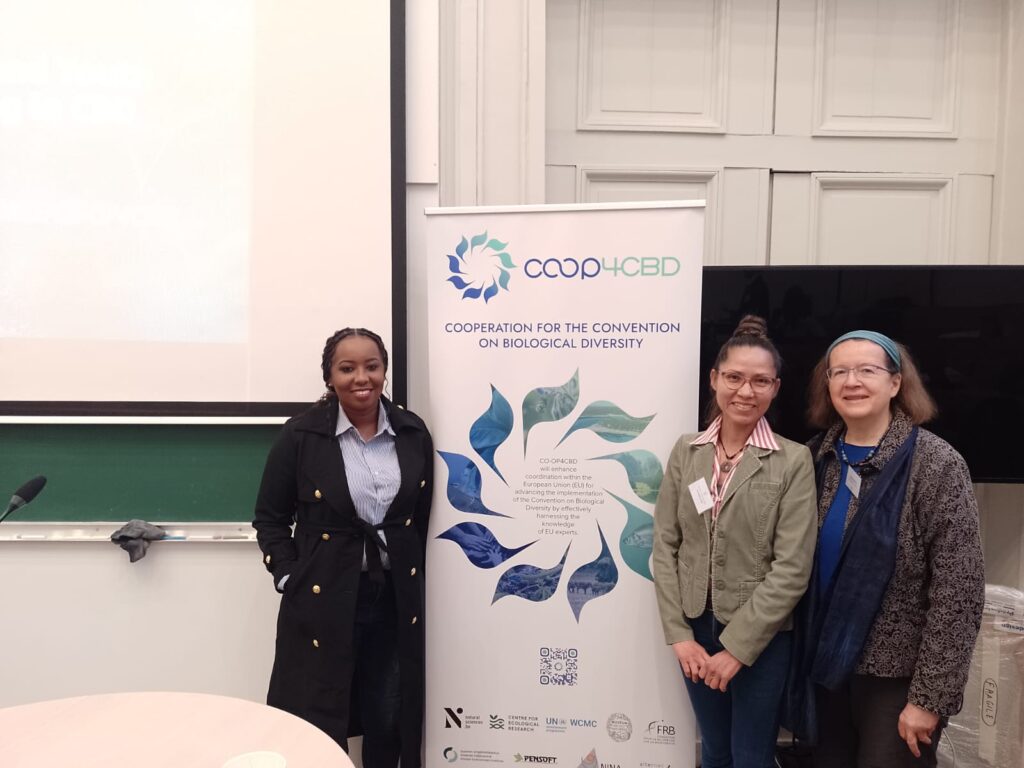
On 22–23 April 2026, the CBD Women’s Caucus was represented by four members — Sharon Ruthia and Cristina Eghenter as trainers, and Fatou Ndiaye and Bertha Medrano as trainees — at the CO-OP4CBD Training Session on Engaging and Strengthening Capacity-Building for Civil Society in preparation for CBD COP17, held at the French Museum of Natural History in Paris, France.
This event was organized within the framework of the Horizon Europe Cooperation for the Convention on Biological Diversity project (CO-OP4CBD), the French National Museum of Natural History (MNHN) and the HUN-REN Centre for Ecological Knowledge (HUN-REN CER
Our voices at the COOP4CBD Training
Over two days, this event brought together stakeholders from Europe, Eastern Europe, Africa, and Latin America — including young people, holders of traditional ecological knowledge, and women’s organizations — to strengthen their participation in CBD processes ahead of COP17 in Yerevan, Armenia. Through training sessions, shared experiences, and hands-on tools such as simulations and workshops, participants explored how to navigate Convention mechanisms, build alliances across the CBD’s diverse actors, and amplify the voices of youth, indigenous knowledge holders, and women, including through presentations by the CBD Women Caucus
On the first day, participants learned about the structure and operation of the Convention on Biological Diversity (CBD), how civil society and rights holders can participate in the process, and the importance of a comprehensive society approach to biodiversity governance.
On behalf of the CBD Women’s Caucus, Sharon Ruthia highlighted the work carried out by the Caucus, as well as the different ways in which participants can become involved, with particular emphasis on policy and advocacy engagement.
On the second day, the focus shifted to how to translate the lessons learned on the first day into negotiation and advocacy actions. Concrete tools, approaches, and practical experiences from the Youth and Women’s Caucus highlighted how to participate more effectively in the CBD process
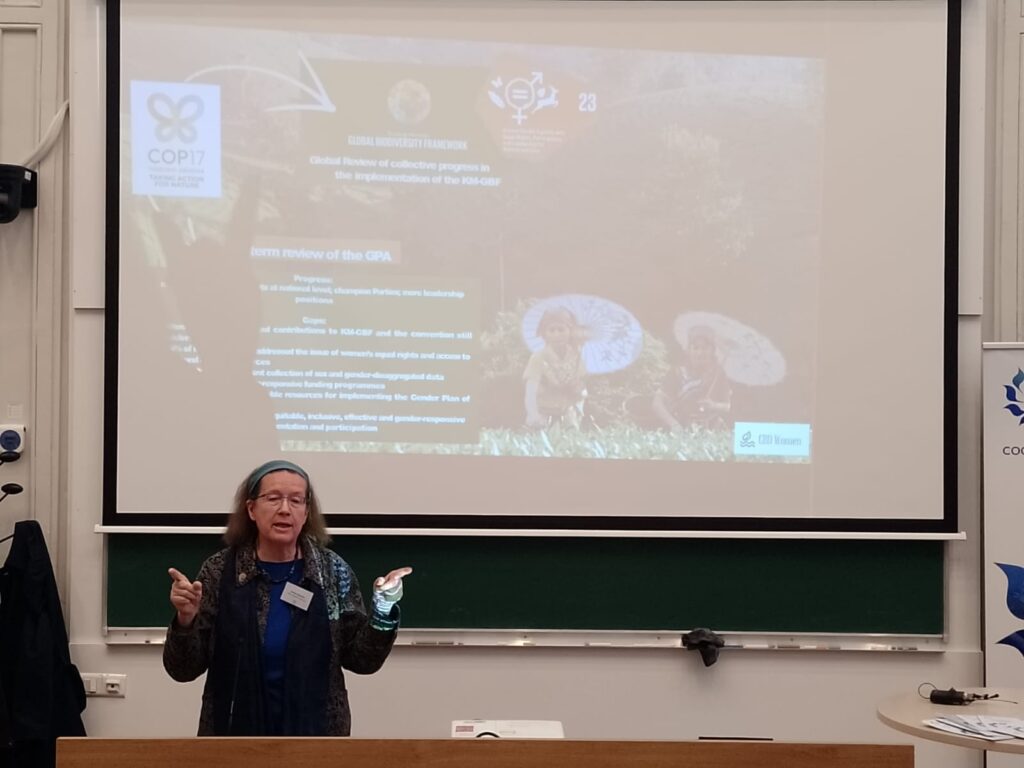
Cristina Eghenter, on behalf of the Women’s Caucus provided a perspective on the road to CBD COP17, she shared information about the mid-term review of the Gender Action Plan as a critical point for the WC at the upcoming COP17. Significant challenges remain for the meaningful, effectiveand safe participation of women, the recognition of their role in the work of the Convention, and their contributions to achieving the Global Biodiversity Framework (GBF). The resulf of the mid-term review of the GPA concluded that women continue to be undervalued in biodiversity policymaking and decision-makingand explained how the WC is preparing for the event with a detailed roadmap that includes training, side events, dialogues and webinars
A key highlight of the training was the strong emphasis on the “whole-of-society” approach, which seeks to build productive linkages between bottom-up community action and state-led processes. This approach was presented as a critical pathway for transformative change, enabling more inclusive participation in biodiversity governance and creating opportunities for civil society to engage in mechanisms such as the Global Review process.
Discussions also addressed recent developments within CBD processes, including progress on planning, monitoring, reporting, and review (PMRR). Participants noted advancements made at COP15, such as the alignment of National Biodiversity Strategies and Action Plans (NBSAPs) with the global framework and the establishment of periodic global reviews, as well as updates from COP16, including increased national submissions and the development of reporting templates.
Outcomes and nexts steps
One of the things highlighted re barriers to full and effective participation was the language challenges faced by rights holders and stakeholders. While plenary sessions offer simultaneous interpretation, contact groups and other negotiation meetings do not.
The event offered valuable visibility into WC’s mission and an appreciation of the important advocacy role it plays within the CBD. It underscored the shared concerns of civil society and the promise of an inclusive COP17 with strong participation from Armenian civil society organizations.
This space also allowed the WC delegates to carry out advocacy and identify opportunities, connect and link with the other participants, including young people, activists civil society organizations, researchers, academia, and government officials from Armenia and France, primarily.
The four members of the WC delegation were able to get to know each other a little better, strengthen and deepen bonds, unite for advocacy, and confirm that we are strong, passionate and wise women and leaders in our communities and spaces. .