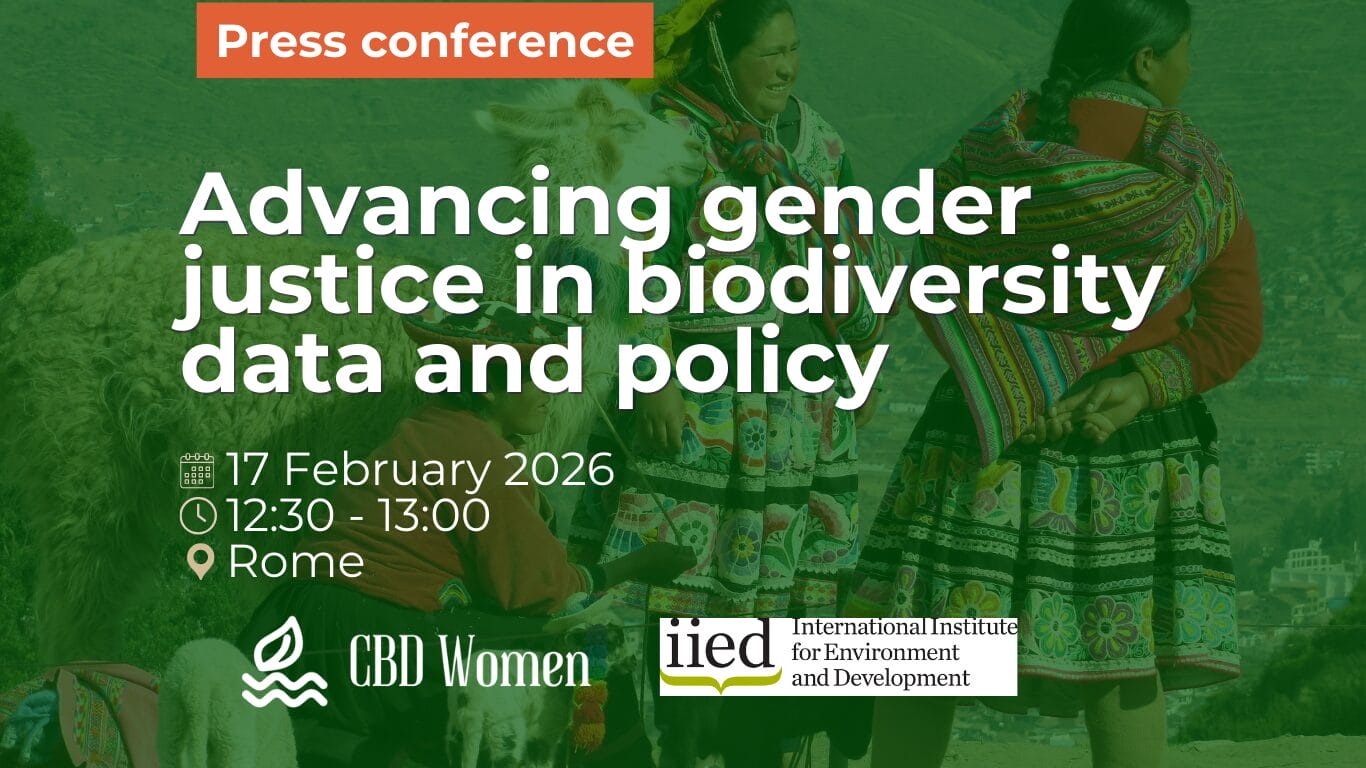
The press conference, held on 17 February 2026 during the SBI meetings in Rome, marked the launch of the report “Advancing Gender Justice in Biodiversity Data and Policy.” Developed in collaboration with the International Institute for Environment and Development (IIED), the event brought together researchers, Parties, and international organizations to explore how women-led and community-based organizations contribute to biodiversity data generation and policy processes.
Event Highlights and Key Insights
Women-led organizations are already producing data
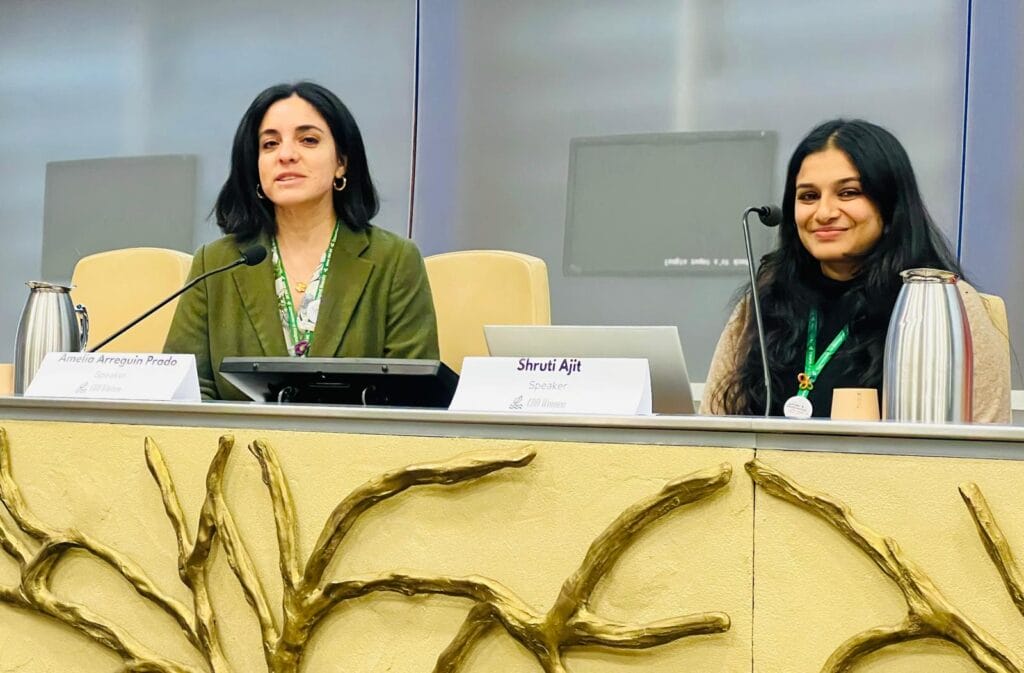
Shruti, speaking on behalf the CBD Women’s caucus, presented key findings on the report. The most remarkable point was that women -led organizations are already producing data. The highest level of engagement occurs in data dissemination and communication (77%), reflecting a strong commitment to sharing information with communities, policymakers, and the wider public. A similarly high proportion of organizations reported using data in their work (70%), particularly to support advocacy efforts, inform decision-making, and meet reporting obligations.
Shruti highlighted that the aproaches that the communities integrates are unique, the biggest barries is the funding, without sustained financing, skills can not be applied
Structural barries to data use
The assessment identified several barriers that limit the impact of women-led organizations in biodiversity data processes, including:
-
funding gaps
-
limited access to technological tools
-
insufficient training in data management
Around 46% of organizations reported gaps in data management skills, often linked to the absence of sustained financing. At the same time, 96% of respondents belong to scalable networks, highlighting strong potential for collaboration and knowledge sharing.
These findings suggest that the implementation of the Global Biodiversity Framework should not rely solely on top-down approaches, but must recognize and support the knowledge already being generated at the community level.
Ceire Booth, representing the UN Environment Programme World Conservation Monitoring Centre highlighted the importance of data tools, including the component indicator developed for Target 23. This tool enables Parties and stakeholders to monitor progress over time and strengthen gender-responsive reporting.
Venge Nyirongo, representing UN Women, emphasized the political dimension of data, noting that “what gets counted determines whose knowledge is valued and whose contributions become visible.” She also pointed out that similar challenges are emerging across the three Rio Conventions. The key obstacle, she explained, is not the absence of evidence, but rather the lack of recognition and political uptake of that evidence.
During the discussion, Marina Lopez, Gender Focal Point of Guatemala, highlighted the importance of what she described as “the face of data.” She stressed the need to recognize the rights of those who produce data and to ensure ethical processes in how this information is used. From this perspective, data has the power either to make certain groups visible or to render them invisible. One of the first steps toward greater visibility is data disaggregation by gender, age, and linguistic community, which is essential for ensuring that biodiversity policies and investments reach the communities generating this knowledge.
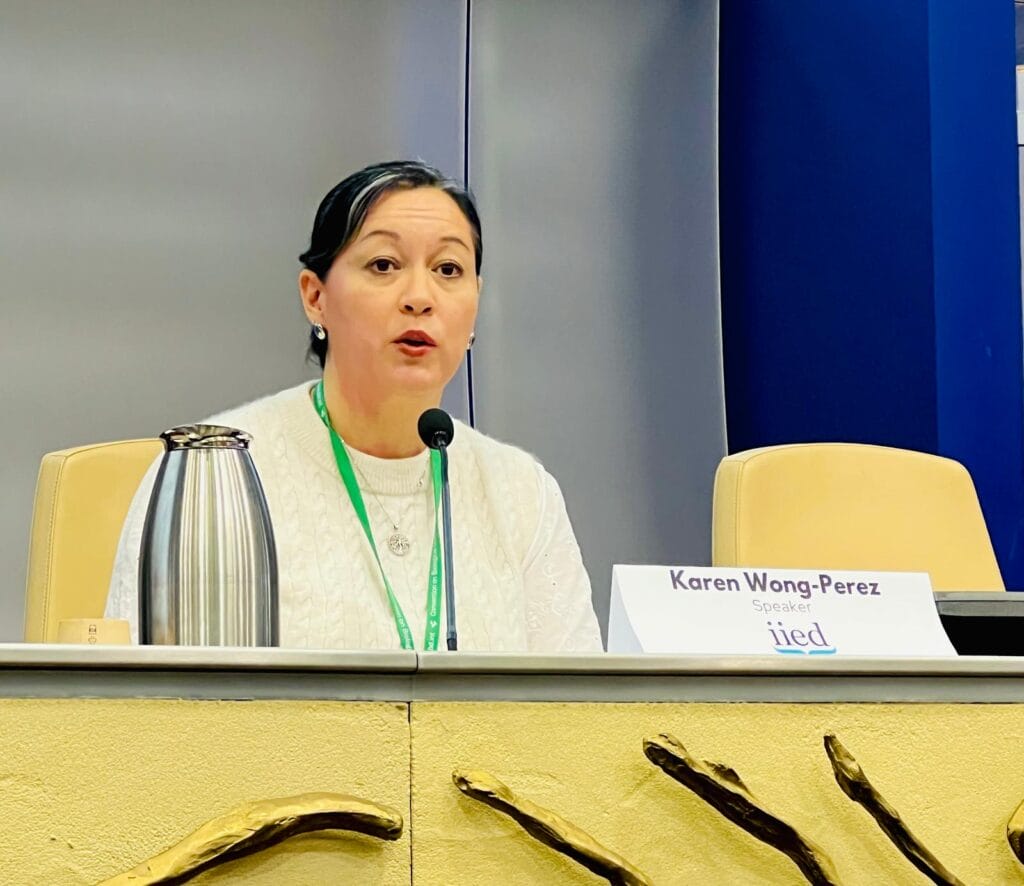
Finally, Karen Wong-Pérez representing IIED, summarized the key message emerging from the discussion: gender equality is essential for effective biodiversity implementation. However, many Parties still face challenges in tracking progress, including gaps in capacity and financing. While important action is already taking place on the ground, much of it remains invisible. Implementation requires accountability, and accountability depends on evidence. As she noted, the challenge is therefore not only technical, but also political and institutional.
The report provides an important overview of the current state of biodiversity data generated by women-led and community-based organizations, while also outlining the next steps needed to strengthen capacities and promote peer-to-peer knowledge sharing. This upcoming process will focus on strengthening gender-responsive and ethical biodiversity data practices, while ensuring that evidence generated by women-led and community organizations is recognized as a valid and complementary source of biodiversity knowledge.