
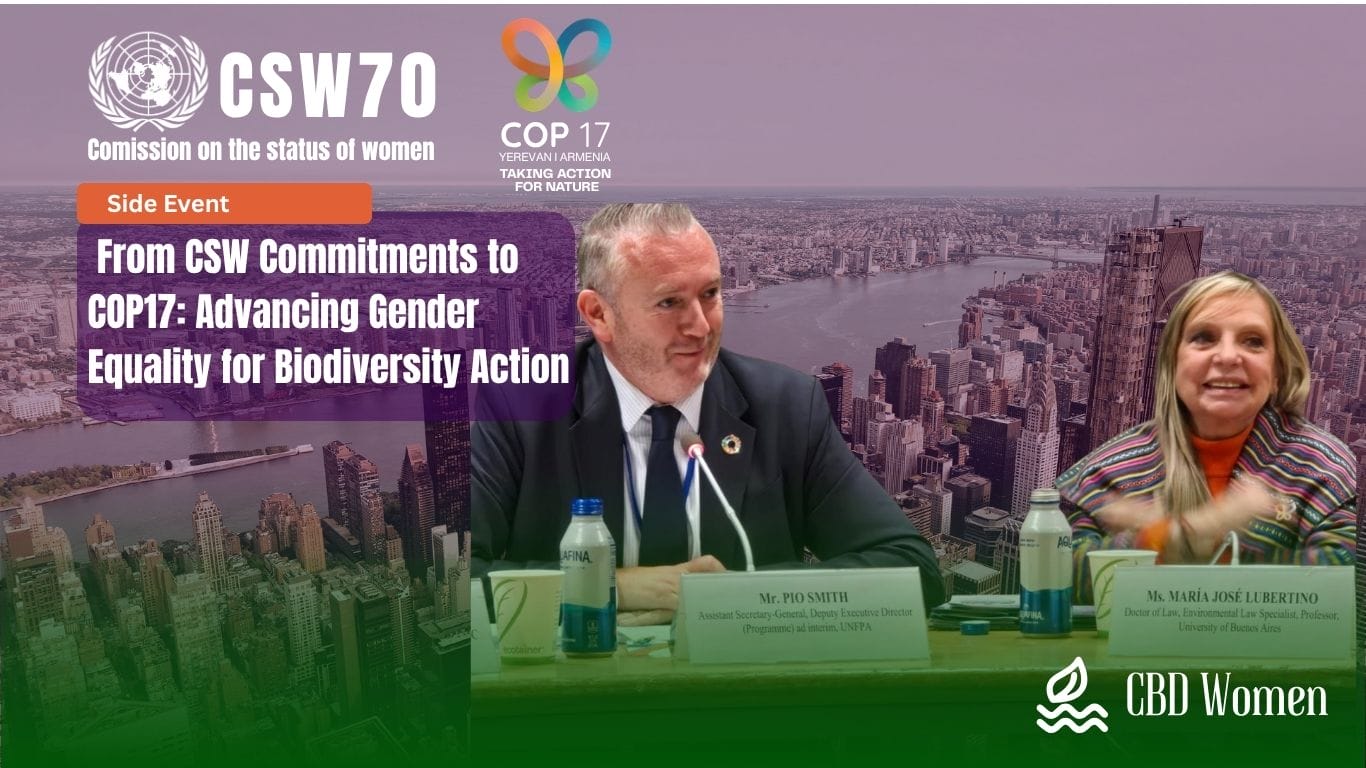
On the margins of CSW70, the side event “From CSW Commitments to CBD COP17: Advancing Gender Equality for Biodiversity Action” brought together governments, UN agencies, and civil society to strengthen the connections between gender equality and biodiversity governance in the lead-up to COP17.
Organised by the Permanent Mission of Armenia and co-sponsored by the United Kingdom, the Philippines, UNDP, UN Women and UNFPA, the event provided an important platform to reflect on how commitments under the Commission on the Status of Women (CSW) can translate into concrete, gender-responsive action under the Convention on Biological Diversity (CBD). The discussion featured high-level speakers and experts, including H.E. Paruyr Hovhannisyan (Armenia), H.E. Robert Abisoghomonyan (Armenia), H.E. Mher Margaryan (COP17 Presidency), Faydah Dumarpa (Philippines Commission on Human Rights), H.E. Tara Soomro (United Kingdom), Ivana Živković (UNDP), Nyaradzayi Gumbonzvanda (UN Women), Leyla Sharafi (UNFPA), and María José Lubertino (CBD Women’s Caucus).
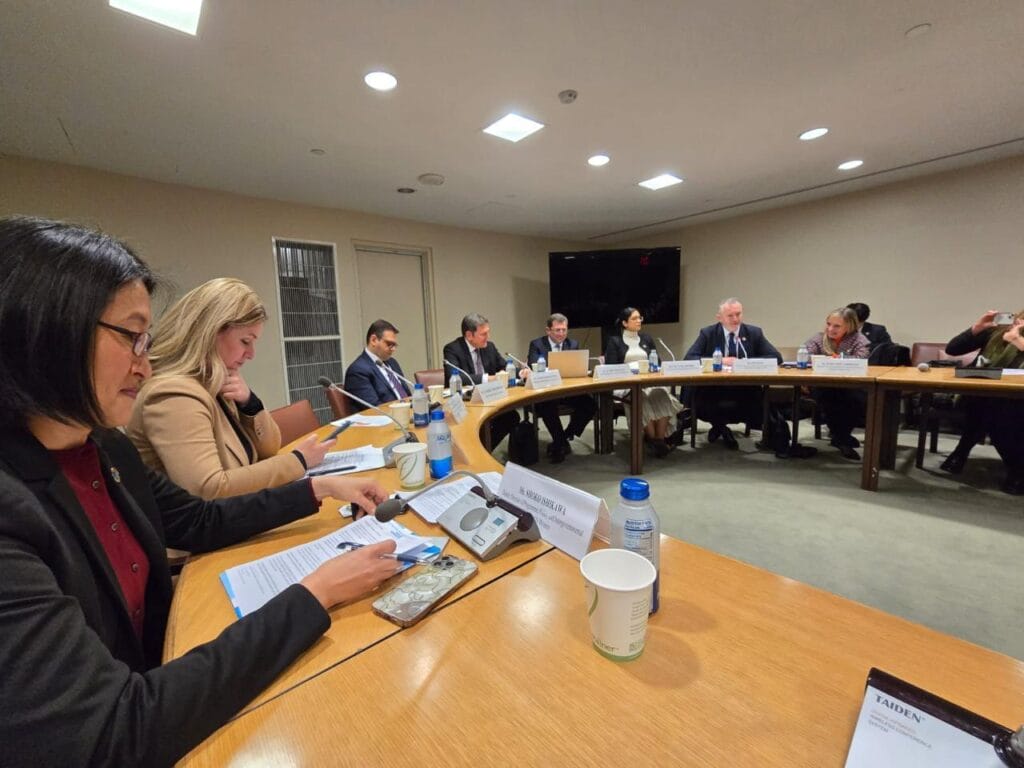
Across the dialogue, speakers highlighted that biodiversity loss and environmental degradation continue to disproportionately affect women and girls in all their diversity, including from Indigenous Peoples, and from local and Afro-descendant communities, while at the same time women are essential actors in conservation, sustainable resource management, and community resilience. The need to move from commitments to implementation—ensuring women’s full, equal and meaningful participation and leadership—was a central message.
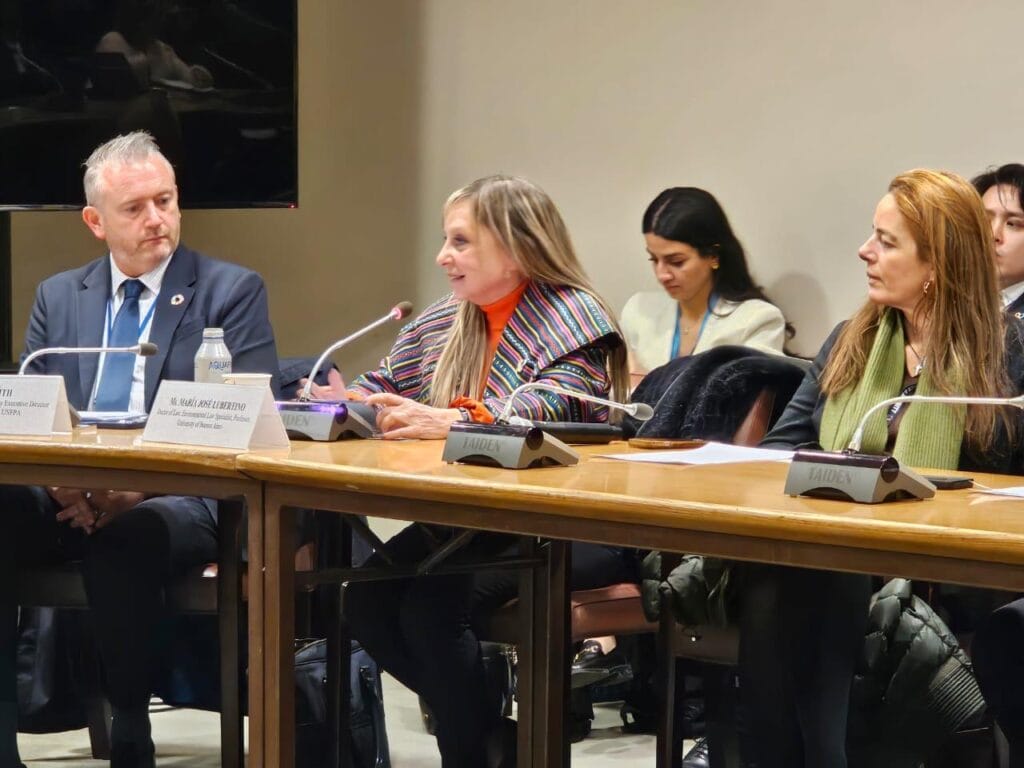
In her intervention, on behalf of the CBD Women’s Caucus, María José Lubertino delivered a clear and compelling call to action: there is no pathway to biodiversity conservation without gender justice. She underscored the structural inequalities that continue to limit women’s access to land, resources, finance, and decision-making, and highlighted that these injustices not only undermine rights, but also weaken biodiversity outcomes. Her intervention pointed to three key priorities: institutionalising women’s leadership in biodiversity governance, ensuring gender-responsive and accessible biodiversity finance, and strengthening data, monitoring, and accountability systems to make women’s contributions visible and measurable. She also emphasised the importance of implementing Target 23 and the Gender Plan of Action (2023–2030) as central pillars of the Kunming-Montreal Global Biodiversity Framework (KM-GBF).A key focus of the broader discussion was how to strengthen policy coherence and institutional coordination across gender and environmental agendas, and how biodiversity finance mechanisms can better support women-led and community-based initiatives.
The event also marked an important step toward COP17, under the upcoming Presidency of Armenia, with a strong emphasis on delivering an inclusive and action-oriented process that places gender equality at the centre of biodiversity action.
By bridging the outcomes of CSW70 with the implementation of the KM-GBF, the discussions reinforced that advancing gender equality is not only a matter of rights, but a prerequisite for effective, just, and transformative biodiversity outcomes