
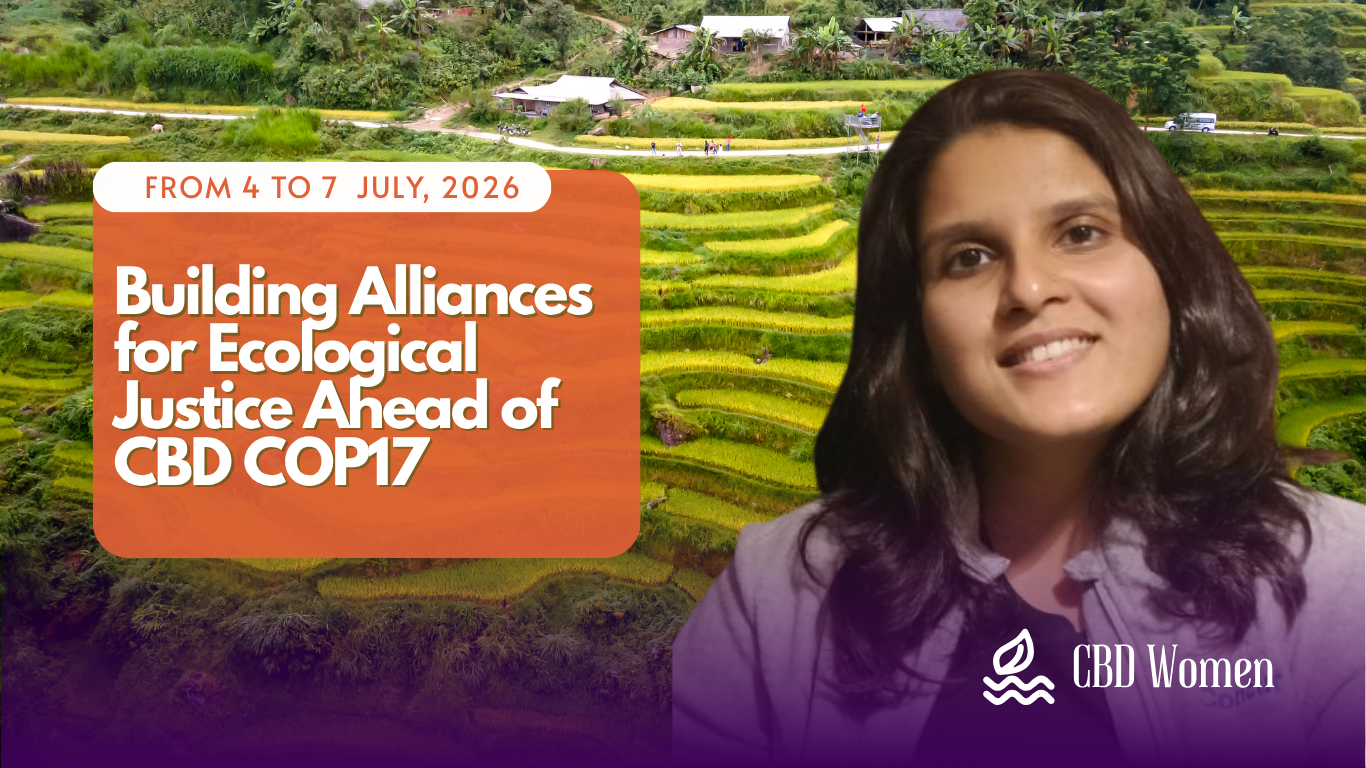
By Ms. Meenal Tatpatii, CBD Women’s Caucus member
Disclaimer: The views expressed in this blog are those of the author and do not necessarily reflect the official position or opinions of the CBD Women’s Caucus
As preparations intensify for the seventeenth Conference of the Parties (COP17) to the Convention on Biological Diversity (CBD), it is increasingly evident that achieving the goals of the Kunming-Montreal Global Biodiversity Framework (KMGBF) will require more than technical negotiations and implementation plans. It demands stronger alliances across social movements and a shared commitment to addressing the structural drivers of biodiversity loss. It was in this spirit that the Biodiversity Policy and Alliance Building Meeting brought together civil society organisations, activists and policy advocates from around the world in Janda Baik, Malaysia. Meenal Tatpati (Independent Lawyer and Consultant, India) represented the CBD Women’s Caucus at the meeting and ensured that feminist perspectives remained central to conversations on biodiversity governance.
About the Event
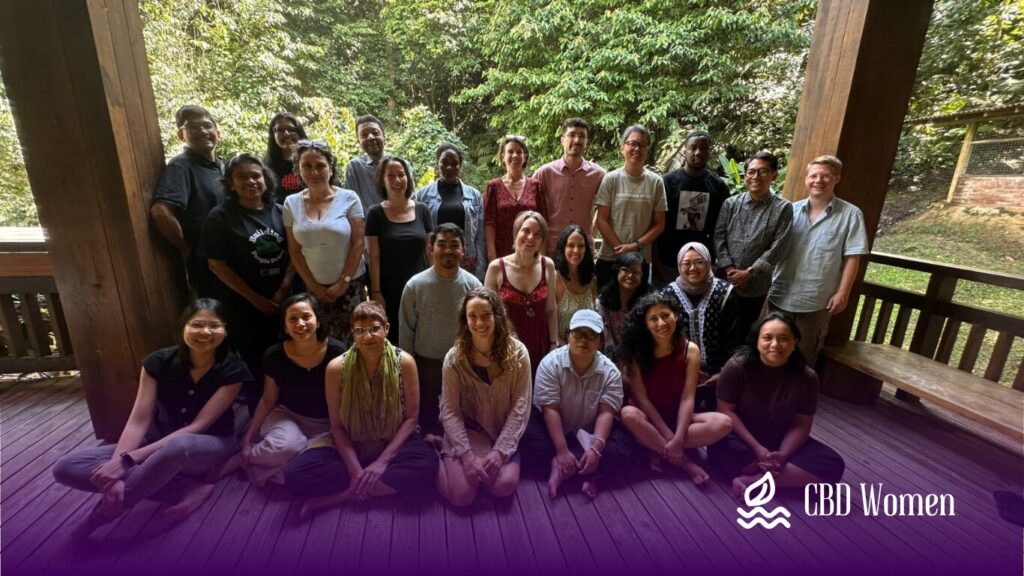
Convened by Third World Network (TWN) and the Global Youth Biodiversity Network (GYBN), in collaboration with Sahabat Alam Malaysia and Friends of the Earth International from the 4th to the 7th of July, 2026, the four-day meeting brought together representatives from civil society organisations, environmental justice movements, youth networks and policy advocates to reflect on the implementation of the CBD and the KM-GBF ahead of COP17. It was built on a previous meeting convened in Panama in 2025.
Unlike many policy meetings focused solely on negotiations, this gathering sought to examine biodiversity loss within the wider context of interconnected ecological, social and economic crises. Participants explored the structural causes of biodiversity destruction including unsustainable economic systems, harmful financial flows, extractive development models and growing inequalities and discussed pathways for building alliances beyond the biodiversity sector. The meeting’s objectives included analysing key issues expected at COP17, deepening understanding of thematic issues, strengthening collaboration across constituencies, identifying collective actions beyond the CBD process, and developing a shared vision for ecological justice. Meenal highlighted the importance of recognising women not merely as beneficiaries of conservation but as rights holders, knowledge holders and political actors whose leadership is essential for transformative biodiversity governance. She also emphasised that while important progress has been made through the adoption of the Gender Plan of Action and Target 23 of the KMGBF, implementation must move beyond participation towards addressing unequal power relations, securing rights and ensuring accountability.
Event Highlights and Activities
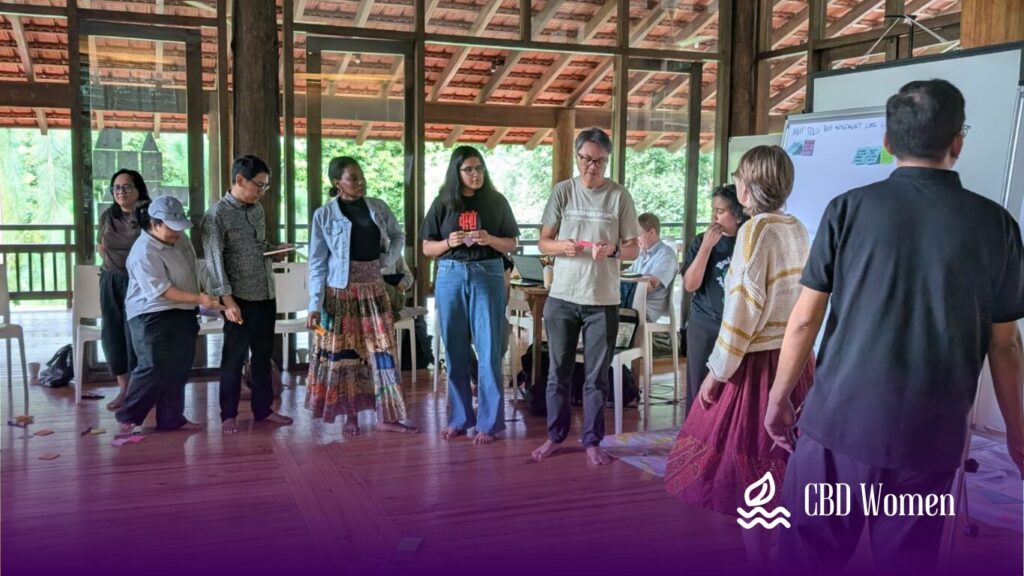
The four-day programme combined strategic discussions, thematic working sessions and collaborative planning exercises designed to develop shared analyses and coordinated advocacy ahead of COP17.
The meeting opened with discussions on understanding the biodiversity crisis within broader socio-ecological systems and developing a collective vision for transformative change. Participants reflected on how biodiversity policy must be connected with wider struggles for climate justice, food sovereignty, Indigenous rights, debt justice and economic transformation.
Throughout the meeting, participants explored several interconnected themes, including:
- Financial and economic systems driving biodiversity loss;
- Harmful subsidies and biodiversity-destructive activities;
- False solutions, including biodiversity offsets and market-based approaches;
- Human rights and biodiversity governance;
- Climate change and biodiversity;
- Agriculture and food systems;
- Strategy development for COP17; and
- Alliance building and movement outreach towards ecological justice.
The meeting also provided an opportunity to exchange experiences with organisations working across climate, agriculture, environmental justice and social movements, helping to identify areas for stronger collaboration beyond formal CBD negotiations.
Outcomes and Next Steps
One of the meeting’s strongest outcomes was a shared recognition that biodiversity governance cannot be separated from broader questions of justice, equity and systemic transformation. Participants reaffirmed the need for coordinated advocacy that addresses the structural drivers of biodiversity loss while promoting rights-based and community-led approaches to conservation.
Discussions also laid the groundwork for stronger collaboration among civil society organisations ahead of COP17, including joint messaging on key policy issues, movement-building beyond CBD spaces, and continued engagement around an emerging ecological justice agenda.
For the CBD Women’s Caucus, participation in the meeting reinforced the importance of ensuring that feminist perspectives remain embedded within broader biodiversity debates. As preparations continue towards COP17, the Caucus remains committed to working alongside allies to advance biodiversity governance that is equitable, rights-based and centred on the knowledge, leadership and lived experiences of women, Indigenous Peoples and local communities.