
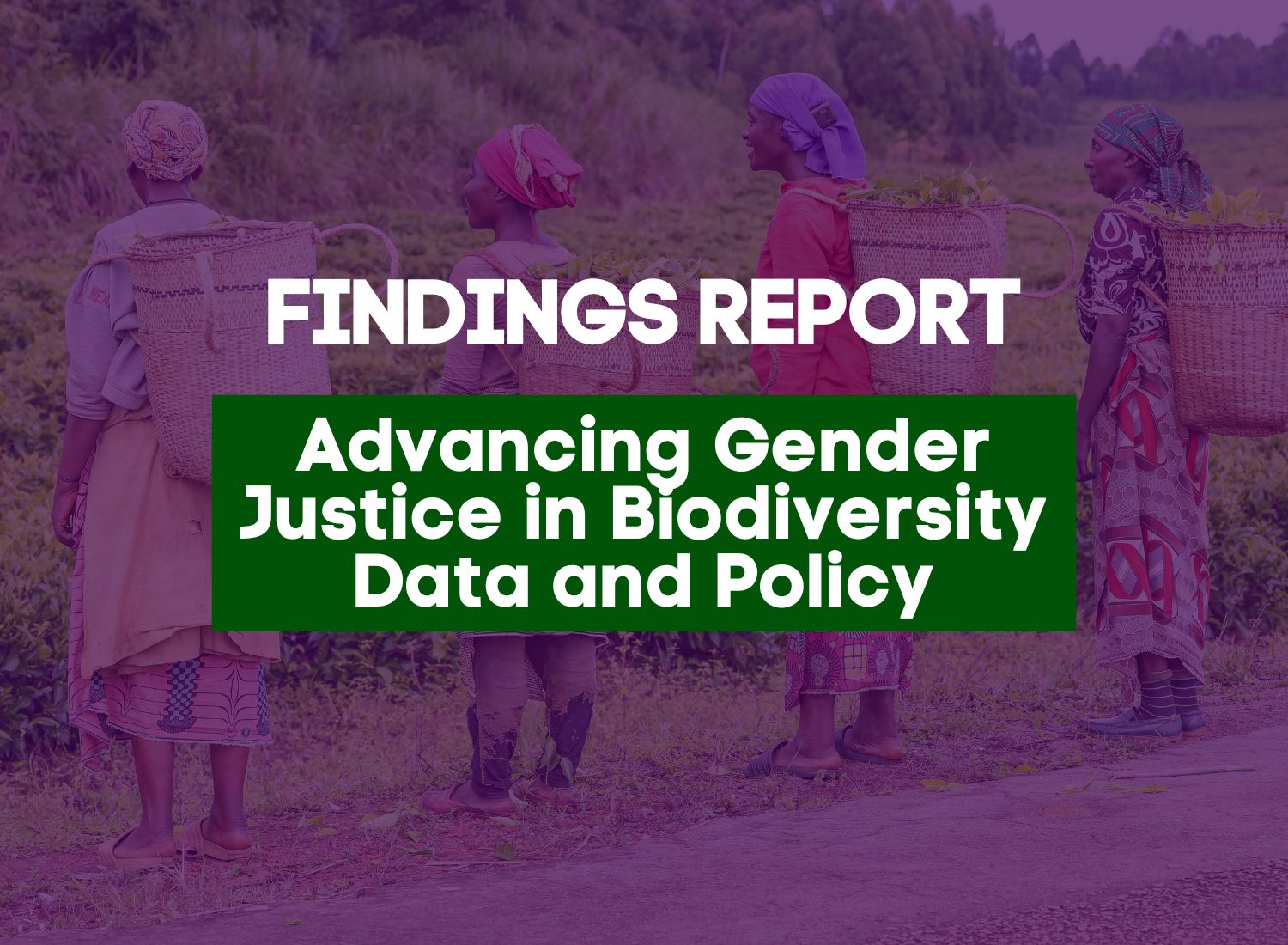
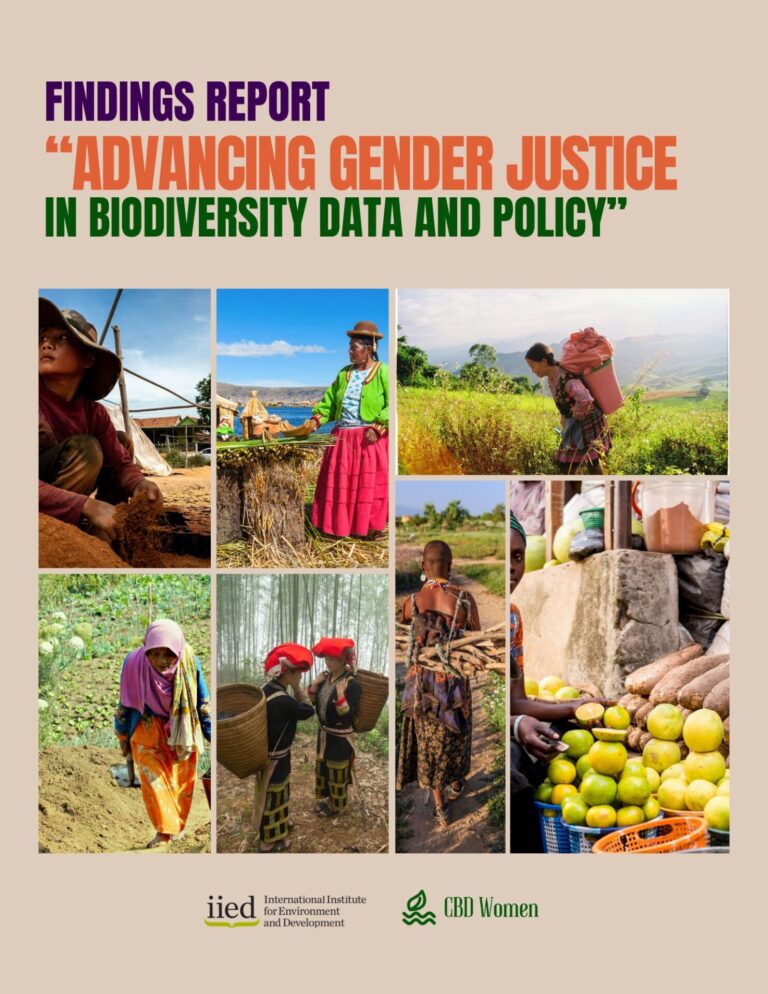
This findings report, developed by the CBD Women’s Caucus in partnership with IIED, presents an exploratory, network-based mapping of capacities, practices and needs related to gender-responsive biodiversity data among women-led and community-based organisations. It examines engagement across the biodiversity data value chain — from data collection and management to analysis and use — based on 70 survey responses from 33 countries.
The findings show that women-led and community-based organisations are already generating vital, community-rooted biodiversity data. Organisations are particularly active in data communication and use, while also contributing significantly to data collection and analysis. However, important gaps remain, particularly in data management, where lower levels of engagement may affect the long-term accessibility and usability of evidence. The report also highlights the central role of qualitative and narrative-based approaches — such as interviews, storytelling and focus groups — in capturing lived experiences and advancing gender-responsive knowledge systems.
Despite strong engagement and ethical intent, organisations face persistent structural barriers, including limited funding, access to technology and technical capacities. Critically, the report finds that the main constraint to policy impact is not the lack of data, but its limited recognition and uptake in decision-making processes. At the same time, the findings point to significant opportunities for peer-to-peer learning and for strengthening a whole-of-society approach to biodiversity monitoring and reporting, building on the existing contributions of women-led organisations to advance more gender-just biodiversity governance.
This report forms part of the broader initiative “Advancing gender justice in biodiversity data and policy”, led by the CBD Women’s Caucus in collaboration with IIED. The initiative aims to strengthen the capacities of women’s organisations to generate and use gender-responsive data, support the co-creation of evidence to influence biodiversity policy, and foster collective learning processes across regions.
Learn more about the initiative here.
Year: 2026
Type: Report
Authors: Shruti Ajit, Amelia Arreguín-Prado, Fatima El-Aaraby (CBD Women’s Caucus)
and Karen Wong-Pérez, Francesca Booker, Cinzia Cimmino (IIED)
Themes: Data Value Chain, Biodiversity Monitoring, Gender-responsive data