
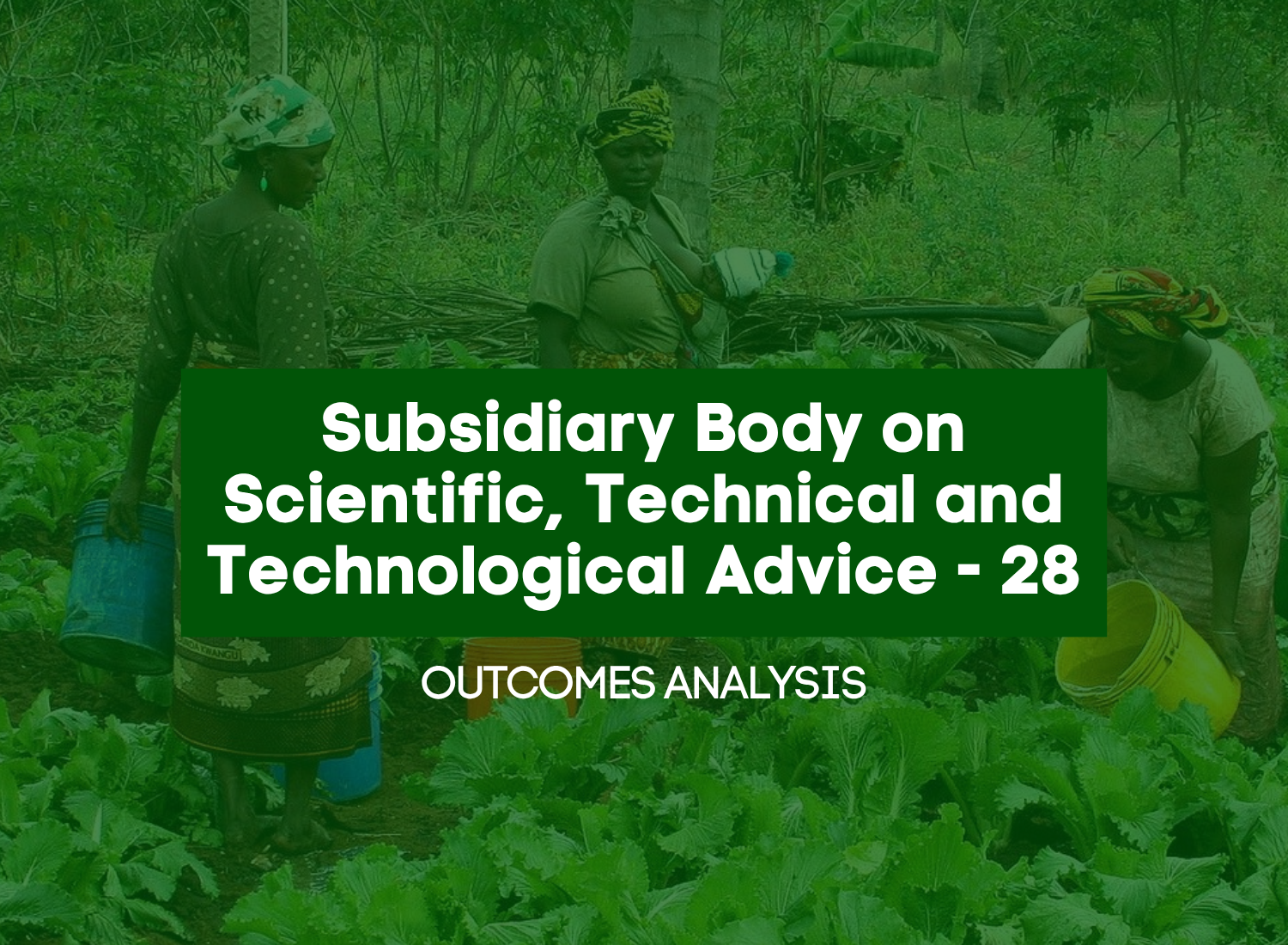
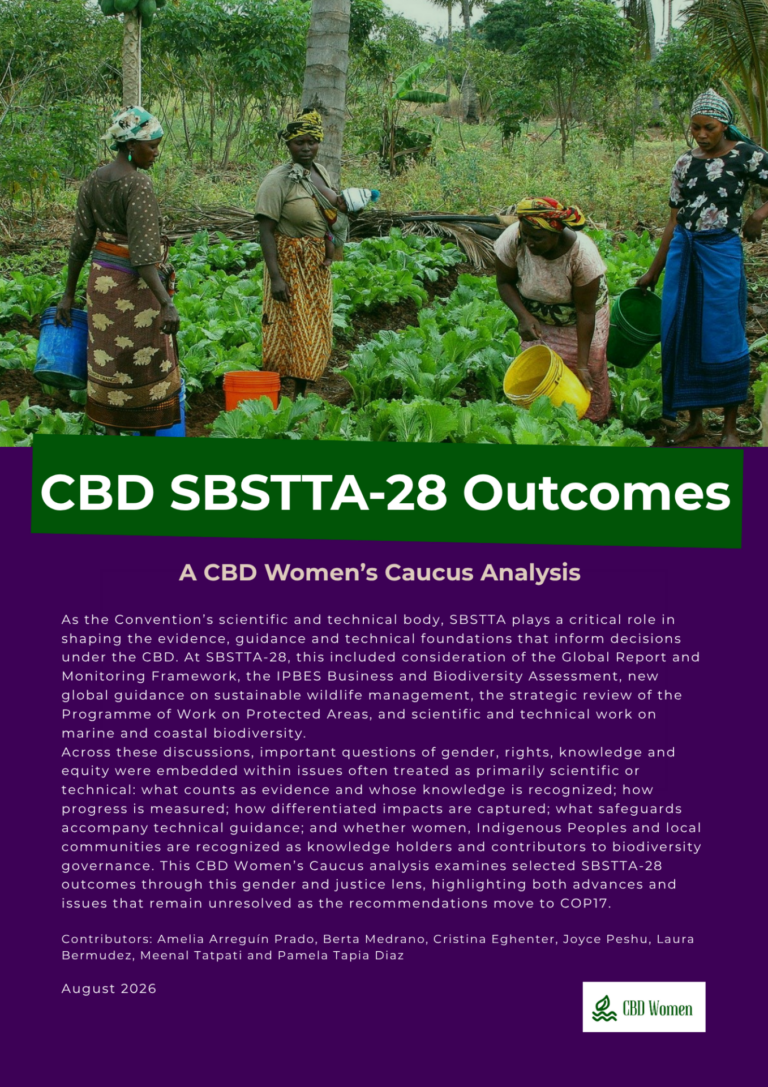
As the Convention’s scientific and technical body, SBSTTA plays a critical role in shaping the evidence, guidance and technical foundations that inform decisions under the CBD. At SBSTTA-28, this included consideration of the Global Report and Monitoring Framework, the IPBES Business and Biodiversity Assessment, new global guidance on sustainable wildlife management, the strategic review of the Programme of Work on Protected Areas, and scientific and technical work on marine and coastal biodiversity.
Across these discussions, important questions of gender, rights, knowledge and equity were embedded within issues often treated as primarily scientific or technical: what counts as evidence and whose knowledge is recognized; how progress is measured; how differentiated impacts are captured; what safeguards accompany technical guidance; and whether women, Indigenous Peoples and local communities are recognized as knowledge holders and contributors to biodiversity governance. This CBD Women’s Caucus analysis examines selected SBSTTA-28 outcomes through this gender and justice lens, highlighting both advances and issues that remain unresolved as the recommendations move to COP17.
Share this policy analysis with your colleagues and help advance gender-responsive, equitable and effective biodiversity decisions ahead of COP17.
Year: 2026
Type: Policy analysis
Authors: CBD Women’s Caucus, with contributions from » Amelia Arreguín Prado, Berta Medrano, Cristina Eghenter, Joyce Peshu, Laura Bermudez, Meenal Tatpati and Pamela Tapia Diaz«
Themes: Planning, Monitoring, Reporting and Review (Global Report and Monitoring Framework), IPBES Business and Biodiversity Assessment, Sustainable Wildlife Management, Programme of Work on Protected Areas (Target 3), Marine and Coastal Biodiversity (EBSAs and BBNJ Agreement)