
By Mr. Patrick Mukanga Bwase, CBD Women’s Caucus member
Disclaimer: The views expressed in this blog are those of the author and do not necessarily reflect the official position or opinions of the CBD Women’s Caucus
Why This Forum Mattered
Women’s land rights are not a side issue in biodiversity governance — they are at its very heart. Women hold invaluable knowledge of local plants, ecosystems, and sustainable farming practices, yet fewer than 15% of landowners worldwide are women. Their rights to land are systematically violated due to discriminatory legal and cultural norms, and this structural inequality directly undermines the implementation of the Kunming-Montreal Global Biodiversity Framework (KM-GBF) and the CBD Gender Plan of Action.
It is precisely to address this gap that the Women’s Land Rights Initiative (WLRI) was established, a dynamic community dedicated to the systematic integration of women’s land rights across the three Rio Conventions: the Convention on Biological Diversity (CBD), the United Nations Framework Convention on Climate Change (UNFCCC), and the United Nations Convention to Combat Desertification (UNCCD).
About the Event
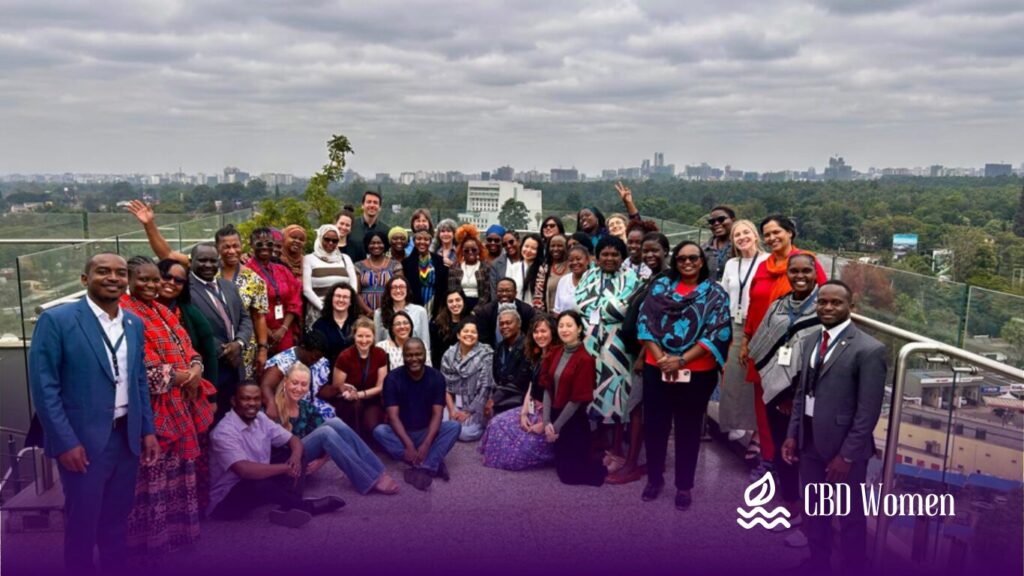
The 4th WLRI Forum, held in Nairobi, Kenya, from 29 June to 2 July 2026, brought together representatives from the three Rio Conventions, government members from multiple countries, financial partners, and civil society organisations to advance a shared vision for women’s land rights in international environmental governance.
This fourth forum built on three years of collective work:
- 2023 — Berlin: Why does WLRI need to be recognised in the Rio Conventions? Does it make sense to think about synergies?
- 2024 — Berlin: Prioritising entry points for strengthening women’s land rights through the conventions and leveraging synergies across them — with grassroots leadership as the unanimous priority
- 2025 — Nairobi: Building a shared understanding of the initiative and deepening action planning
- 2026 — Nairobi: Action planning and the future of WLRI
The forum pursued two core objectives:
Objective 1: Shaping a shared vision and building stronger collaboration — reflecting on how being part of the WLRI community has shaped our work and our advocacy
Objective 2: Designing action — advancing three action tracks:
- Global Action Track — anchoring WLRI in the three Rio Conventions through coordinated advocacy, key messages, coalition building, and mutual support at COPs and global events
- National Action Track — translating global commitments into national plans and strategies
- Financial Action Track — ensuring adequate and direct financing for women’s land rights
CBD Women's Caucus Representation
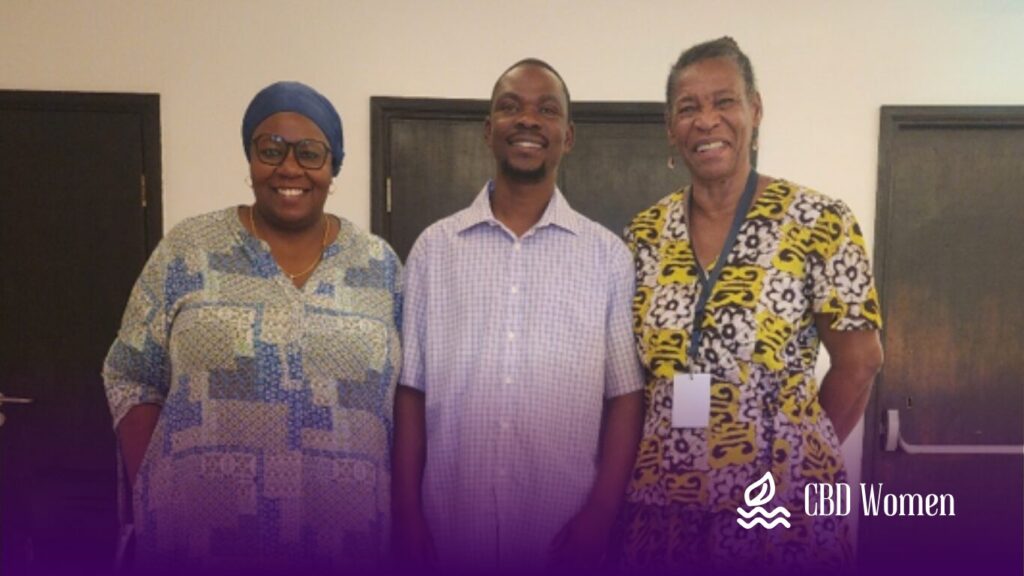
The CBD Women’s Caucus was actively represented at the forum by three Board members:
- Ms. Mwanahamisi («Mishy») Singano — Director of Policy at WEDO, with expertise in feminist and climate movements, network coordination, and decolonial development approaches
- Mr. Patrick Mukanga Bwase — Project Manager at the Conseil pour la Terre des Ancêtres NGO (DRC), working at the intersection of gender, tropical forest management, climate change and youth engagement
- Ms. Ruth Spencer — Chair of the Marine Ecosystems Protected Areas (MEPA) Trust (Antigua and Barbuda), bridging grassroots women’s voices and global biodiversity processes
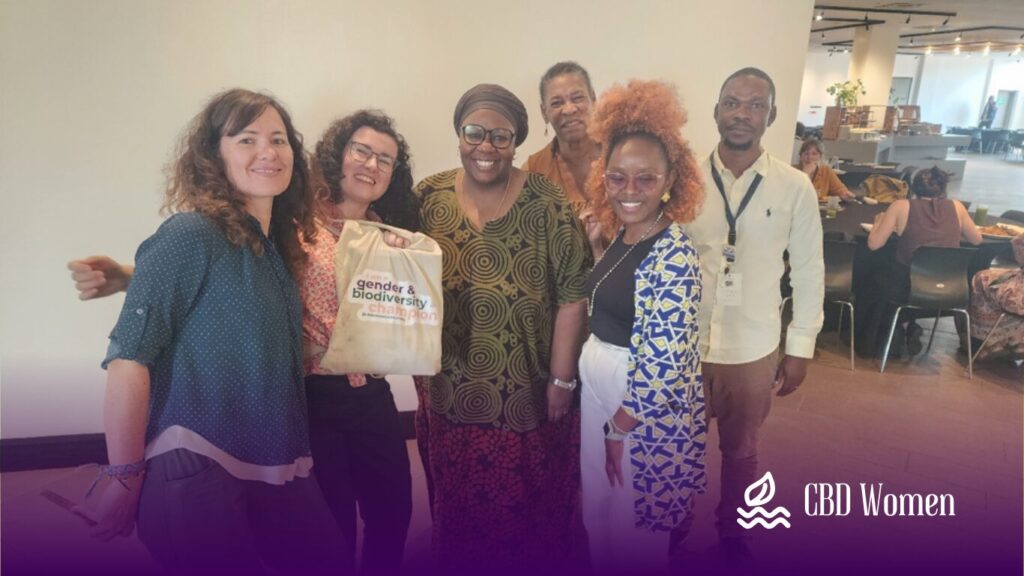
The Caucus was also represented by Ms. Annabel Kennedy (WECF).
The Caucus engaged primarily in the Global Action Track, contributing to the development of key messages and advocacy priorities for CBD COP17, and working alongside representatives from all three Rio Conventions to ensure that women’s land rights are systematically integrated into biodiversity governance.
Event Highlights
Day 1 — 29 June: The forum opened with participant introductions, a presentation on the WLRI and its objectives, a recap of the three previous forums, and an overview of the three action tracks. The afternoon included an optional visit to Karura Forest, providing participants with an opportunity to connect with a powerful example of community-led conservation in Nairobi.
Day 2 — 30 June: Participants split into their respective action tracks for in-depth group work. As part of the Global Action Track, the CBD Women’s Caucus contributed to developing the agenda and key messages to be presented at CBD COP17, with a focus on sequencing themes according to their strategic importance for advocacy in Yerevan, Armenia. The afternoon featured optional thematic sessions where participants could learn from each other’s work and challenges.
Day 3 — 1 July: A morning of cross-track sharing, with mixed groups reviewing priorities across all three tracks and identifying common messages. In the afternoon, Mr. Patrick Mukanga Bwase presented on the land rights of rural Pygmy women in the DRC — specifically the situation in Goma — and Ms. Ruth Spencer led a session on resource mobilisation and financial sustainability: «If there were no money, what would we do?»
Day 4 — 2 July: A final day of review, reflection, and forward planning — consolidating the outcomes of four days of rich discussion and charting the path ahead for WLRI ahead of CBD COP17.
Outcomes and Next Steps
The forum produced concrete outcomes that will directly feed into the CBD Women’s Caucus’s advocacy at CBD COP17 in Yerevan:
- Key messages on women’s land rights developed for CBD COP17, to be integrated into the CBD Women’s Caucus’s statements and interventions
- Joint side events with the CBD Women’s Caucus at COP17, amplifying women’s voices on land rights through WLRI
- Action groups established across the three tracks, with regular online coordination meetings planned
- Strengthened synergies among partners from all three Rio Conventions, including government representatives, NGOs and grassroots organisations
- Commitment to collective advocacy — ensuring that WLRI’s message is heard at all levels across all three conventions
As the CBD Women’s Caucus has long affirmed: she who defends biodiversity also defends the land. Women’s land rights and biodiversity justice are inseparable — and the WLRI community is building the collective power to make that truth impossible to ignore.