
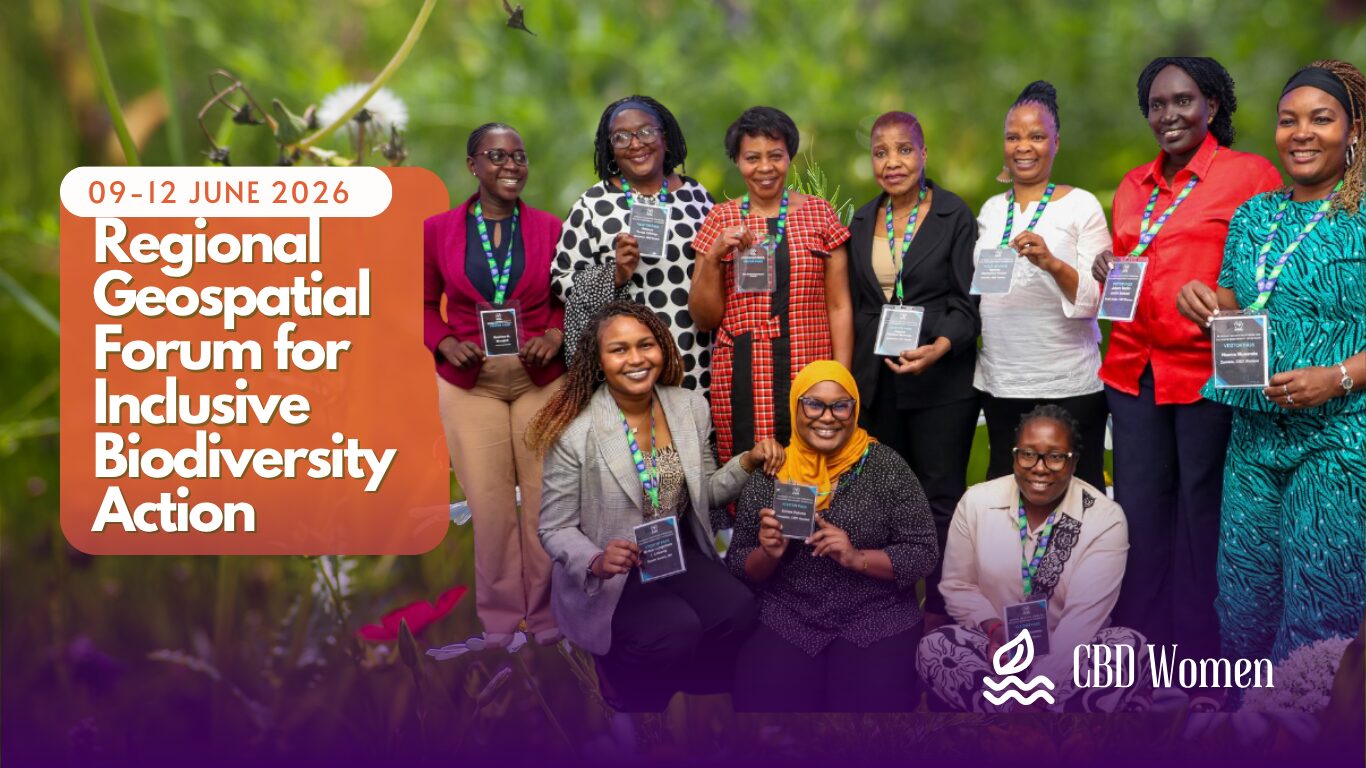
By Ms. Gcinile Zeli Ndzinisa (Eswatini), Ms. Victorlyn Mukiri (Kenya), Ms. Malintle Ceslestina Kheleli (Lesotho), Ms. Alice Kammwamba (Malawi), Ms. Saquina Filimone Mucavele (Mozambique), Ms. Marie Salvatrice Musabyeyezu (Rwanda), Ms. Nondumiso Dumakude (South Africa), Ms. Nadlin Justin Samuel Jubara (South Sudan), Ms. Rahma Kiriwe (Tanzania), Ms. Nsama Musonda (Zambia), and Ms. Rebecca Tendai Chirenga (Zimbabwe), CBD Women’s Caucus members
Disclaimer: The views expressed in this blog are those of the author and do not necessarily reflect the official position or opinions of the CBD Women’s Caucus
About the Event
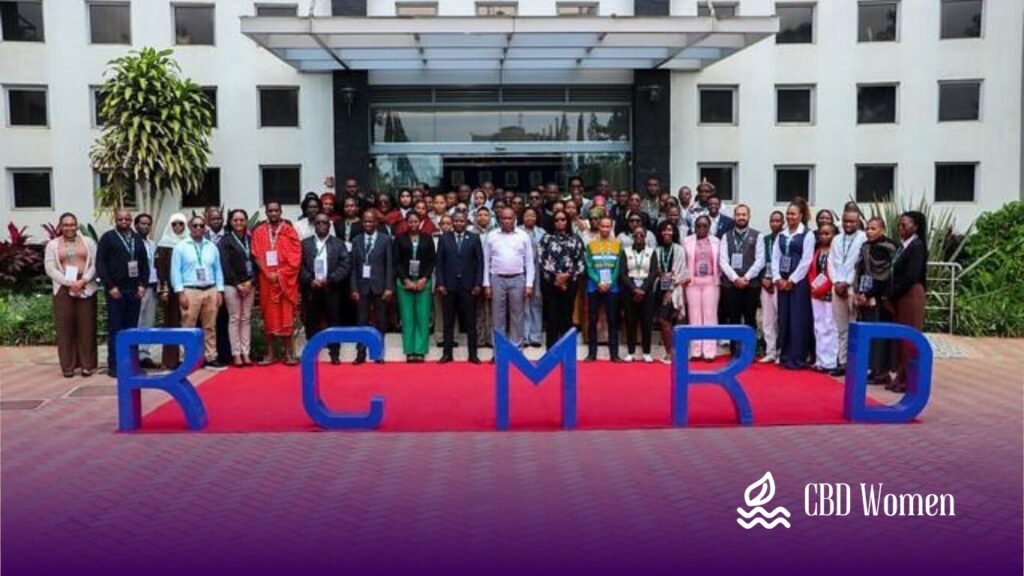
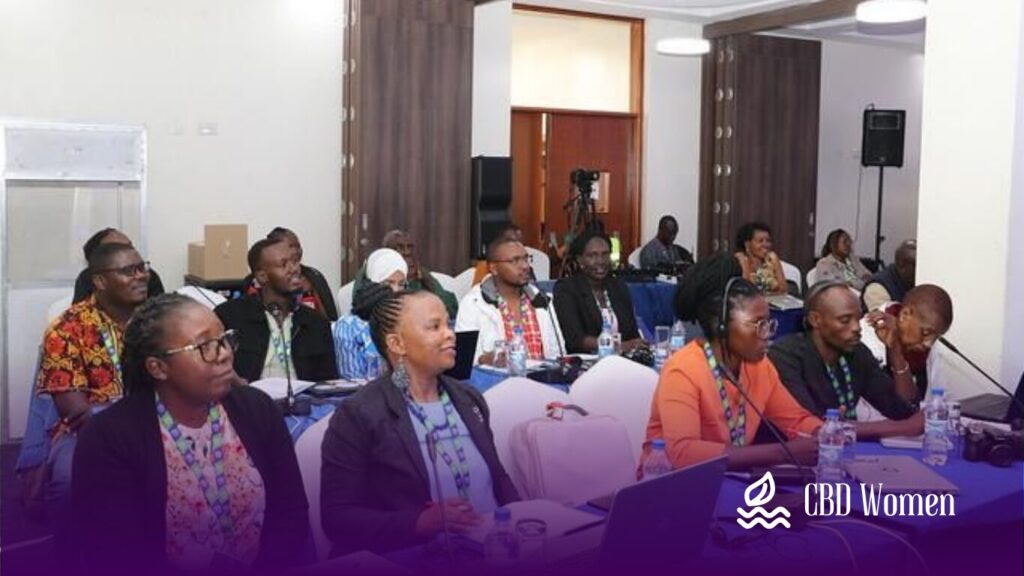
The Regional Geospatial Forum for Inclusive Biodiversity Action was held from 9–12 June 2026 at the Regional Centre for Mapping of Resources for Development (RCMRD) in Nairobi, Kenya. The forum was convened by the RCMRD through its Regional Centre of Excellence for Biodiversity, Forests and Seascape Ecosystem Management (RCoE) as part of the Africa Regional Centres of Excellence (ArcX) Programme. The event brought together approximately 100 participants, including representatives of women, Indigenous Peoples and Local Communities (IPLCs), youth organizations, government institutions, civil society organizations, academia, and regional partners from 24 countries across Eastern and Southern Africa. The primary objective of the forum was to strengthen inclusive biodiversity governance by promoting the practical application of geospatial technologies to support community-led biodiversity conservation, monitoring, and reporting under the Kunming–Montreal Global Biodiversity Framework (KMGBF).
The forum was designed to contribute directly to the implementation of the Kunming–Montreal Global Biodiversity Framework, particularly Target 21, which seeks to ensure that the best available knowledge is accessible to decision-makers; Target 22, which promotes the full, equitable, inclusive, effective and gender-responsive participation of Indigenous Peoples and Local Communities, women and youth in biodiversity related decision making; and Target 23, which calls for gender justice and a gender responsive approach in biodiversity conservation and sustainable use. Through dialogue, practical demonstrations, field-based learning and collaborative planning, the meeting emphasized that biodiversity conservation cannot succeed without recognizing the knowledge, leadership and stewardship of local communities, particularly women, who continue to play indispensable roles in managing natural resources and safeguarding ecosystems.
The unique features of the forum were its strong emphasis on translating geospatial science into practical tools that communities can use to strengthen conservation outcomes. Rather than focusing solely on technical presentations, the programme demonstrated how accessible geospatial technologies, including digital mapping, spatial data, geographic information systems (GIS) and Story Maps, can improve documentation of conservation activities, support evidence-based decision making, enhance biodiversity monitoring, and increase the visibility of community-led initiatives. This practical approach highlighted the growing importance of integrating scientific innovation with Indigenous and local knowledge to support inclusive biodiversity governance.
The four-day programme combined high-level policy dialogue, country presentations, thematic discussions, practical geospatial training, collaborative breakout sessions and a field visit to Ngong Forest, providing participants with opportunities to observe ecosystem restoration and community conservation practices firsthand. These diverse learning approaches fostered regional collaboration and encouraged participants to identify practical solutions that can be adapted within their respective countries. The CBD Women’s Caucus was represented, reaffirming that women are not merely beneficiaries of biodiversity programmes but are leaders, knowledge holders, innovators and custodians of biodiversity.
Objectives of the Forum
The forum sought to:
- Strengthen understanding of community conservation realities.
- Demonstrate practical applications of geospatial technologies.
- Enhance visibility of community-led biodiversity initiatives through Story Maps.
- Promote regional collaboration among Indigenous Peoples, local communities, women and youth.
Workshop Proceedings
The Regional Geospatial Forum for Inclusive Biodiversity Action was conducted over four days programme which combined plenary discussions, country presentations, panel sessions, practical demonstrations, breakout group discussions, field-based learning and hands-on training in geospatial technologies. The proceedings were designed to strengthen inclusive biodiversity governance while building participants’ capacity to utilize geospatial information for biodiversity conservation, monitoring and reporting.
- Day One: Community Voices and Conservation Realities
The workshop officially commenced with welcoming remarks from the organizers, followed by an overview of the objectives of the Regional Geospatial Forum and its contribution to the implementation of the Kunming–Montreal Global Biodiversity Framework (KMGBF). Participants were introduced to the role of geospatial technologies in supporting evidence based biodiversity conservation and the importance of strengthening collaboration among women, Indigenous Peoples and Local Communities (IPLCs), youth and governments.
The highlight of the first day was the Community Voices and Conservation Realities Panel, which brought together representatives from the CBD Women’s Caucus, Indigenous Peoples and Local Communities (IPLCs), and the Global Youth Biodiversity Network (GYBN). Discussions focused on strengthening Indigenous knowledge systems, promoting women’s leadership in biodiversity governance, supporting youth innovation and ensuring equitable participation in biodiversity decision-making. Panelists emphasized that women continue to make substantial contributions to ecosystem restoration, community forestry management, biodiversity monitoring and policy advocacy, yet their contributions remain under recognized within many national biodiversity programmes. Participants further highlighted concerns regarding data ownership, protection of Indigenous knowledge and the need to safeguard community rights when collecting biodiversity information. The session concluded with a strong consensus that achieving the objectives of the Global Biodiversity Framework requires placing women, IPLCs and youth at the centre of biodiversity conservation and decision-making.
- Day Two: Community Governance, Biodiversity Conservation and Climate Resilience
The second day focused on the relationship between community governance, biodiversity conservation and climate resilience. Presentations from participating countries demonstrated how community based conservation contributes to ecosystem restoration, climate adaptation, sustainable livelihoods and biodiversity protection. Women led conservation initiatives from Malawi, participatory conservation models from Eswatini and ecosystem restoration programmes from Zimbabwe illustrated the important role of communities in delivering biodiversity outcomes.
An important thematic discussion examined Human-Wildlife Conflict and Coexistence, where representatives from Tanzania, Zambia, Angola, Botswana, Uganda and Kenya shared practical experiences in addressing conflicts between wildlife and local communities. Discussions emphasized the importance of evidence based assessments, community participation and balanced conservation approaches that protect biodiversity while safeguarding livelihoods.
The afternoon sessions focused on connecting biodiversity information to policy through National Biodiversity Strategies and Action Plans (NBSAPs). Participants explored the different categories of biodiversity data required for effective planning, including ecological information, socio-economic data, gender-disaggregated information, Indigenous knowledge and evidence generated by community conservation initiatives. Breakout group discussions produced recommendations for strengthening the representation of women, youth and Indigenous Peoples in biodiversity planning, improving access to funding for grassroots conservation organizations, integrating traditional ecological knowledge into NBSAPs and enhancing community participation in biodiversity monitoring and reporting.
- Day Three: Field Visit and Practical Learning
The third day was dedicated to experiential learning through a field visit to Ngong Forest, where participants observed practical examples of community-based ecosystem restoration and biodiversity conservation. The visit included demonstrations of indigenous tree nurseries, seedling production systems, invasive species management and restoration activities implemented through collaboration between conservation authorities and local communities.
Participants also learned about community-based monitoring systems used to assess ecosystem health and restoration progress. Discussions highlighted how biodiversity conservation can simultaneously improve livelihoods by creating opportunities for community enterprises linked to restoration activities. The field experience reinforced the importance of local ownership, community participation and long-term stewardship in achieving successful conservation outcomes while demonstrating the practical application of many of the concepts discussed during the previous sessions.
- Day Four: Geospatial Technologies and Story Mapping
The final day concentrated on building participants’ practical skills in using geospatial technologies for biodiversity communication and advocacy. Facilitators introduced Story Maps as innovative tools for documenting and communicating community conservation initiatives by integrating geographic information, photographs, biodiversity data and local narratives into interactive digital stories.
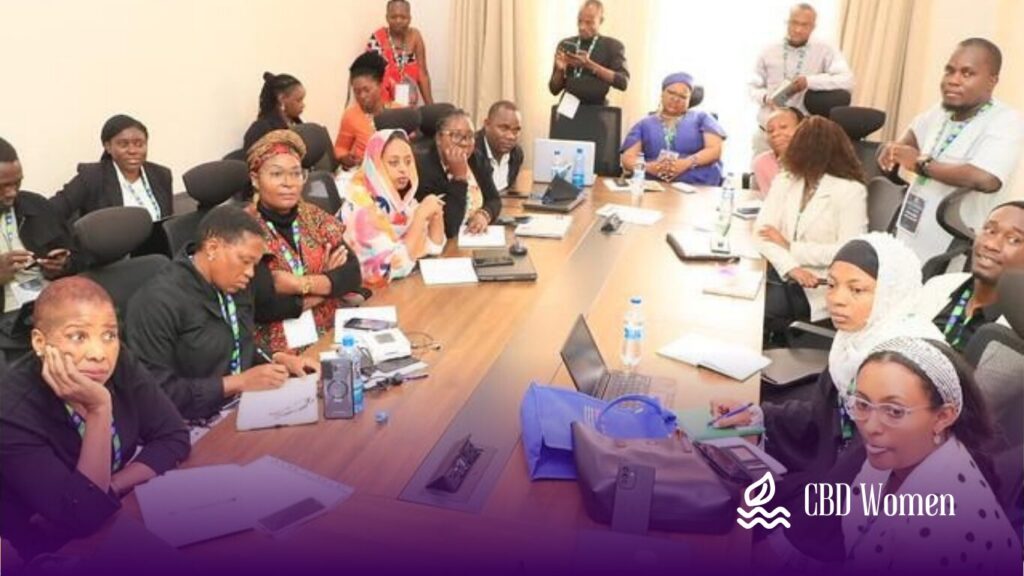
Participants worked in groups to develop Story Map concepts that showcased community-led conservation activities, Indigenous knowledge systems and ecosystem restoration efforts from their respective countries. The practical exercises demonstrated how geospatial technologies can increase the visibility of local conservation initiatives, strengthen evidence-based advocacy, improve biodiversity reporting and support policy engagement at national and regional levels. Participants agreed that these tools have significant potential to empower women and local communities by enabling them to generate, own and communicate biodiversity information using accessible digital platforms.
Overall Outcomes of the Workshop
Throughout the four day programme, several cross cutting themes consistently emerged. Participants recognized that successful implementation of the Kunming–Montreal Global Biodiversity Framework depends on meaningful participation by women, Indigenous Peoples, Local Communities and youth. There was broad agreement that biodiversity conservation should integrate scientific knowledge with Indigenous and local knowledge systems, supported by geospatial technologies that improve monitoring, reporting and decision-making.
The workshop strengthened regional collaboration among participants, enhanced understanding of inclusive biodiversity governance, and increased awareness of the role of geospatial information in conservation planning, and generated practical recommendations for strengthening women-led and community-based biodiversity initiatives. It also established a valuable regional network for continued collaboration, knowledge sharing and advocacy towards achieving the objectives of the Kunming–Montreal Global Biodiversity Framework across Eastern and Southern Africa.
Recommendations to the CBD Women's Caucus
Drawing from the discussions, practical sessions and country experiences shared during the Regional Geospatial Forum for Inclusive Biodiversity Action, the following recommendations are proposed for consideration by the CBD Women’s Caucus to strengthen women’s leadership and participation in biodiversity conservation across Eastern and Southern Africa.
Strengthen Women's Leadership in Biodiversity Governance
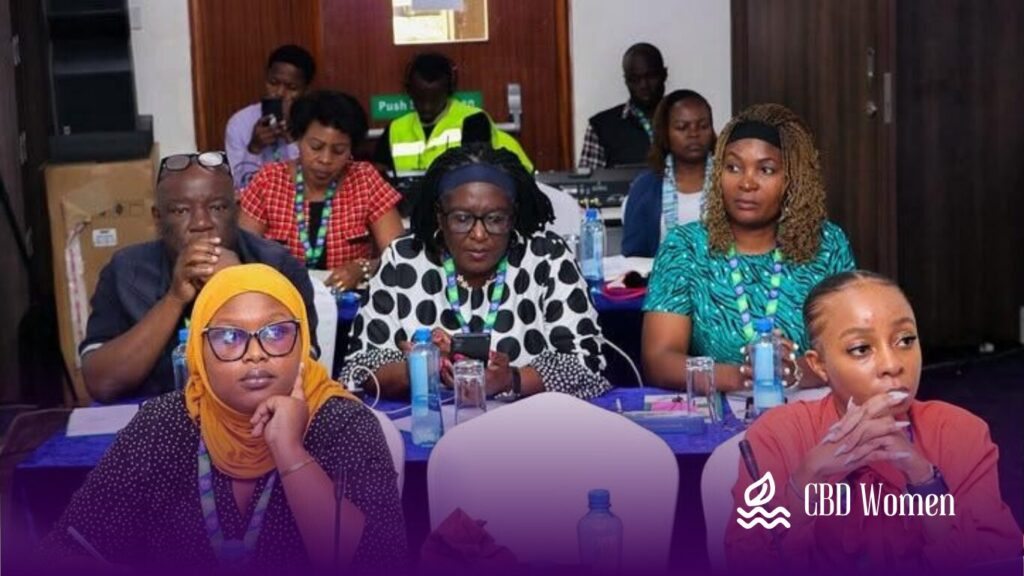
The CBD Women’s Caucus should continue advocating for the meaningful representation of women at all levels of biodiversity governance, including national biodiversity committees, National Biodiversity Strategies and Action Plans (NBSAPs), protected area management boards and international biodiversity negotiations. Women’s participation should extend beyond consultation to include leadership roles in policy formulation, implementation, monitoring and evaluation. Governments should also be encouraged to adopt gender-responsive governance frameworks that recognize women as key decision-makers and custodians of biodiversity.
From the perspective of the CBD Women’s Caucus, the next step is to keep pushing for a truly gender-responsive assessment of the Protocol’s effectiveness. This means ensuring that future reporting and review processes capture not only formal measures but also women’s actual leadership, safety, participation, access to information, access to remedy, and equitable benefit-sharing outcomes. The CBD WC will continue to advocate for indicators and implementation approaches that recognize women, including Indigenous women and women in local communities, as knowledge holders, rights holders, and decision-makers in biodiversity governance. Supporters and partners are encouraged to follow and strengthen this work as the Nagoya Protocol review process moves forward.
Build Women's Capacity in Geospatial Technologies
The forum demonstrated the growing importance of geospatial technologies in biodiversity planning, monitoring, and reporting. The CBD Women’s Caucus should establish a regional capacity-building programme that equips women and women-led organizations with practical skills in Geographic Information Systems (GIS), Global Positioning Systems (GPS), remote sensing, biodiversity mapping, mobile data collection, and Story Maps. Enhancing digital and geospatial literacy among women will improve their ability to document conservation achievements, participate in evidence-based advocacy, and contribute to national biodiversity reporting.
Increase the Visibility of Women-Led Conservation Initiatives
Many successful women-led biodiversity initiatives remain undocumented and underrepresented in national and international biodiversity reports. The CBD Women’s Caucus should support the development of regional platforms that showcase women’s contributions through digital Story Maps, online knowledge portals, case study publications, and multimedia storytelling. Increased visibility will help recognize women’s leadership, attract investment, and facilitate knowledge exchange among women conservation practitioners across regions.
Promote the Integration of Traditional Knowledge
The workshop emphasized that traditional knowledge systems are fundamental to biodiversity conservation. The CBD Women’s Caucus should advocate for the formal recognition, documentation and protection of Indigenous knowledge held by women, ensuring that national biodiversity policies respect community intellectual property rights and promote equitable benefit-sharing. Women from Indigenous Peoples and Local Communities should be supported to actively contribute their knowledge to biodiversity planning, ecosystem restoration and climate adaptation programmes.
Strengthen Women's Participation in National Biodiversity Strategies and Action Plans (NBSAPs)
The Caucus should encourage governments to ensure that women are fully involved throughout the development, implementation and review of National Biodiversity Strategies and Action Plans. Particular attention should be given to incorporating gender-responsive indicators, gender-disaggregated biodiversity data and mechanisms that enable women’s organizations to participate in biodiversity monitoring and reporting. Women’s priorities, experiences and traditional knowledge should inform national biodiversity targets and implementation strategies.
Advocate for Increased Financial Support for Women-Led Conservation
Limited financial resources continue to constrain many grassroots women’s organizations working in biodiversity conservation. The CBD Women’s Caucus should advocate for dedicated financing mechanisms that directly support women-led community conservation initiatives, ecosystem restoration projects, sustainable livelihood enterprises, and biodiversity innovation. International donors, governments and development partners should be encouraged to establish gender-responsive biodiversity financing windows that are accessible to local women’s organizations.
Advocate for Increased Financial Support for Women-Led Conservation
Limited financial resources continue to constrain many grassroots women’s organizations working in biodiversity conservation. The CBD Women’s Caucus should advocate for dedicated financing mechanisms that directly support women-led community conservation initiatives, ecosystem restoration projects, sustainable livelihood enterprises, and biodiversity innovation. International donors, governments and development partners should be encouraged to establish gender-responsive biodiversity financing windows that are accessible to local women’s organizations.
Strengthen Regional Networking and Knowledge Exchange
The Regional Geospatial Forum demonstrated the value of collaboration among women, Indigenous Peoples and Local Communities, youth organizations and conservation practitioners. The CBD Women’s Caucus should facilitate regular regional dialogues, peer-learning exchanges and collaborative platforms that enable women across Africa to share experiences, innovative practices, research findings and policy developments. Strengthening these networks will enhance collective advocacy and foster regional cooperation in implementing the Kunming–Montreal Global Biodiversity Framework.
Promote Gender Responsive Biodiversity Data Collection
Evidence-based biodiversity governance requires reliable and inclusive data. The CBD Women’s Caucus should encourage the collection and use of gender-disaggregated biodiversity data that captures women’s roles, contributions and challenges in conservation. Standardized gender indicators should be integrated into biodiversity monitoring systems to ensure that women’s contributions are visible in national reporting under the Convention on Biological Diversity and the Kunming–Montreal Global Biodiversity Framework.
Foster Partnerships between Indigenous Peoples, local communities, women and youth
Participants recognized that biodiversity conservation is most effective when Indigenous Peoples, local communities, women and youth work collaboratively. The CBD Women’s Caucus should strengthen partnerships with the Global Youth Biodiversity Network (GYBN), Indigenous Peoples’ organizations, and civil society networks to jointly implement conservation initiatives, advocate for inclusive biodiversity policies and promote intergenerational knowledge exchange. Such partnerships will strengthen community resilience and broaden participation in biodiversity governance.
Support Community-Led Conservation and Nature-Based Solutions
Women are at the forefront of ecosystem restoration and sustainable natural resource management. The CBD Women’s Caucus should continue promoting community-led conservation approaches and Nature-based Solutions that integrate biodiversity conservation with sustainable livelihoods, climate resilience and ecosystem restoration. Special attention should be given to scaling up successful women-led initiatives and documenting their contributions to achieving the targets of the Kunming–Montreal Global Biodiversity Framework.
Enhance Communication and Advocacy
The Caucus should strengthen its communication strategy by producing policy briefs, technical papers, success stories, and advocacy materials highlighting women’s contributions to biodiversity conservation. Greater use of digital communication tools, social media platforms and geospatial storytelling will enhance public awareness and influence policy discussions at national, regional and global levels.
To sustain the momentum created by the Regional Geospatial Forum, the CBD Women’s Caucus should develop a regional action plan outlining concrete follow-up activities, timelines, and responsibilities. These may include organizing regional training workshops on geospatial technologies, establishing a community of practice for women biodiversity leaders, supporting pilot Story Map projects, monitoring implementation of the recommendations from the forum, and strengthening collaboration with RCMRD, the ArcX Programme and other regional partners.
Conclusion
The Regional Geospatial Forum for Inclusive Biodiversity Action provided an invaluable opportunity to strengthen regional collaboration, exchange knowledge and explore innovative approaches for advancing inclusive biodiversity governance across Eastern and Southern Africa. The forum clearly demonstrated that achieving the goals and targets of the Kunming–Montreal Global Biodiversity Framework (KMGBF) requires the meaningful participation of women, Indigenous Peoples and Local Communities (IPLCs), and youth as equal partners in biodiversity conservation, policy development and decision-making.
Significant lessons from the forum was the transformative role that geospatial technologies can play in supporting community-led biodiversity action. Practical demonstrations on Geographic Information Systems (GIS), Story Maps and spatial data illustrated how these tools can improve biodiversity monitoring, documentation, reporting and communication while empowering communities to tell their own conservation stories. For women in particular, access to these technologies presents new opportunities to document ecosystem restoration efforts, advocate for policy change, strengthen evidence-based decision-making and increase the visibility of their contributions to biodiversity conservation. Integrating modern geospatial technologies with Indigenous and local knowledge offers a powerful approach to strengthening biodiversity governance and achieving more inclusive and sustainable conservation outcomes. The knowledge, partnerships and practical skills gained during the Regional Geospatial Forum should now be translated into concrete actions that support implementation of the recommendations outlined in this report.
The discussions also highlighted persistent challenges that continue to limit the effective participation of women in biodiversity governance. These include inadequate access to financial resources, limited technical capacity, insufficient representation in decision making structures and the continued under recognition of women’s contributions to conservation and ecosystem management.
In conclusion, participation in the Regional Geospatial Forum has reinforced the importance of inclusive, gender-responsive and community-centred approaches to biodiversity conservation. The forum demonstrated that women are not only beneficiaries of biodiversity programmes but are leaders, innovators, knowledge holders and agents of change whose contributions are fundamental to achieving global biodiversity targets. It is therefore essential that the CBD Women’s Caucus continues to advocate for policies and programmes that recognize, empower and invest in women as key partners in biodiversity conservation. By building on the momentum created through this forum and strengthening regional collaboration, the Caucus can make a significant contribution towards realizing a future where biodiversity is conserved through equitable participation, shared knowledge and sustainable community leadership across Africa and beyond.
To sustain the momentum created by the Regional Geospatial Forum, the CBD Women’s Caucus should develop a regional action plan outlining concrete follow-up activities, timelines, and responsibilities. These may include organizing regional training workshops on geospatial technologies, establishing a community of practice for women biodiversity leaders, supporting pilot Story Map projects, monitoring implementation of the recommendations from the forum, and strengthening collaboration with RCMRD, the ArcX Programme and other regional partners.