
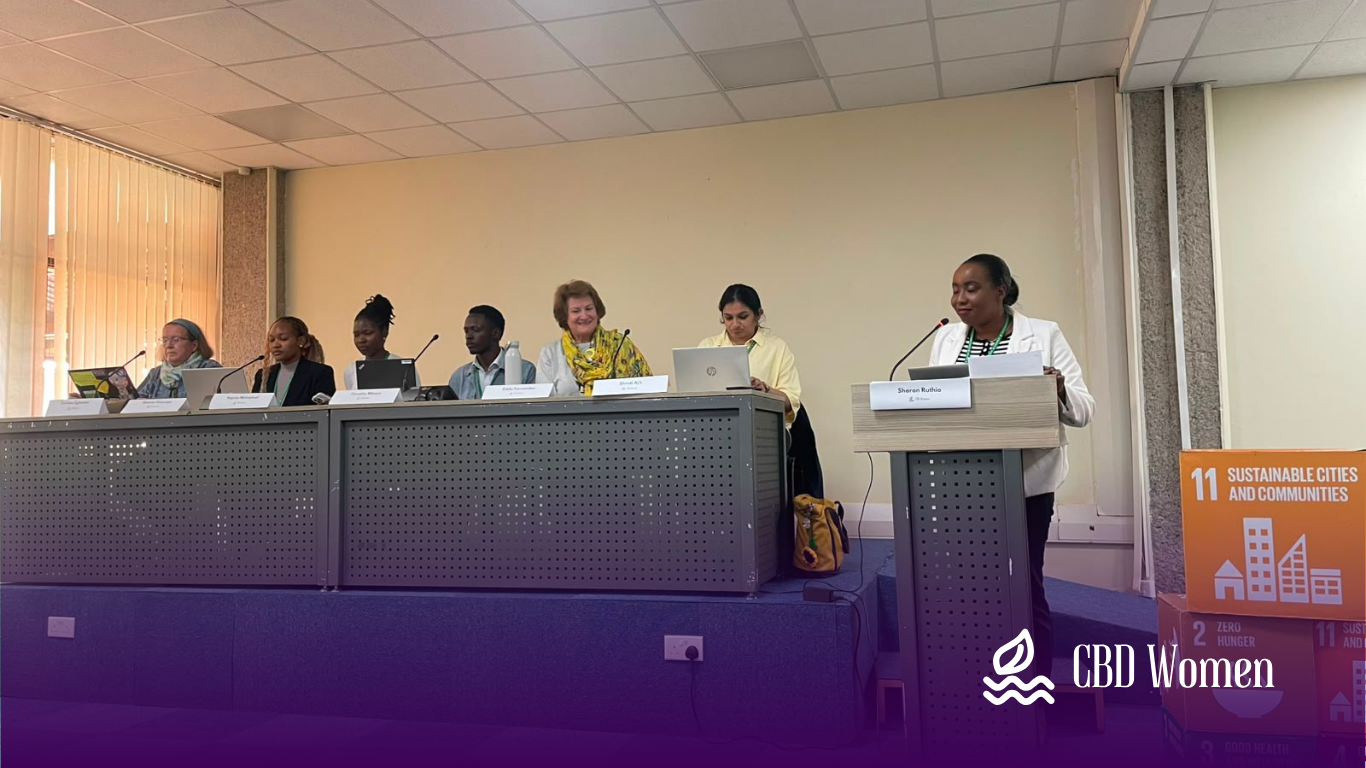
Nairobi, 5 August 2026 — With the seventh meeting of the Subsidiary Body on Implementation underway, the last major intergovernmental gathering before the seventeenth Conference of the Parties in Yerevan, Armenia, the CBD Women’s Caucus gathered journalists and civil society for a press conference on 5 August to lay out where the Kunming-Montreal Global Biodiversity Framework is, and isn’t, delivering for women and girls.
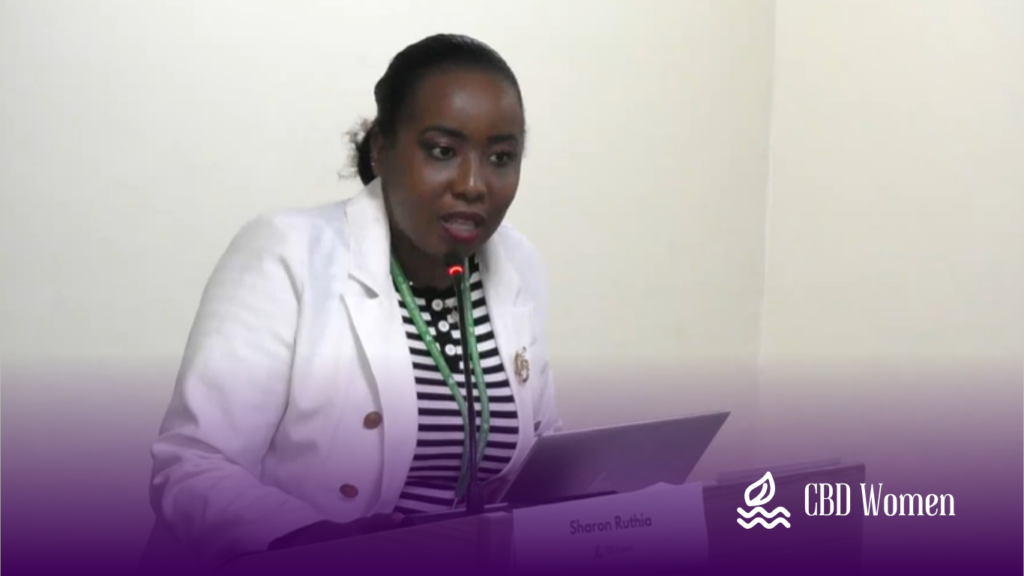
Ms. Sharon Ruthia moderated a panel of six Caucus members, each speaking to a different item on the meeting’s agenda. The throughline across their remarks was blunt: the Framework’s gender-responsive language already exists on paper. What’s missing is the political will, the resourcing, and the accountability to put it into practice.
Where the gaps really are
Ms. Cristina Eghenter opened by answering the question she’d been asked directly: what’s driving these gaps? Her answer was a lack of attention, capacity, and — bluntly — political will, echoed in the Global Report on Collective Progress and its findings on how inconsistently a whole-of-society approach has been applied so far. Her ask to Parties followed from that diagnosis: address the inconsistency head-on, advance women’s leadership under the Framework, and give real weight to women-led solutions that are already accelerating implementation on the ground.
Ms. Najma Mahamud opened by explaining why direct access to funding matters so much in the first place: without it, biodiversity finance gets filtered through layers of institutions that women’s organizations, Indigenous women and grassroots groups rarely have a real foothold in. She painted a picture of the structural barriers that make indirect access so often meaningless in practice — convoluted applications, patchy information on what funding even exists, no legal recognition over land, and eligibility rules written for large institutions rather than community groups. Turning to how direct access can actually be made operative, her fix was concrete — dedicated, directly accessible funding windows, paired with the capacity support to use them and the accountability to track where the money actually goes. As she put it, direct access doesn’t mean much if organizations are still left to navigate a complicated application alone.
Ms. Najma Mahamud picked up the thread on resource mobilization, walking through the meaning of direct access to the resources and the barriers that keep biodiversity finance from reaching the women’s organizations doing the work: convoluted applications, patchy information on what funding even exists, no legal recognition over land, and eligibility rules written for large institutions rather than community groups. Her proposed fix was equally concrete — dedicated, directly accessible funding windows, paired with the capacity support to use them and the accountability to track where the money actually goes. As she put it, direct access to funding doesn’t mean much if organizations are still left to navigate a complicated application alone.
Knowledge, protocols, and who gets to benefit
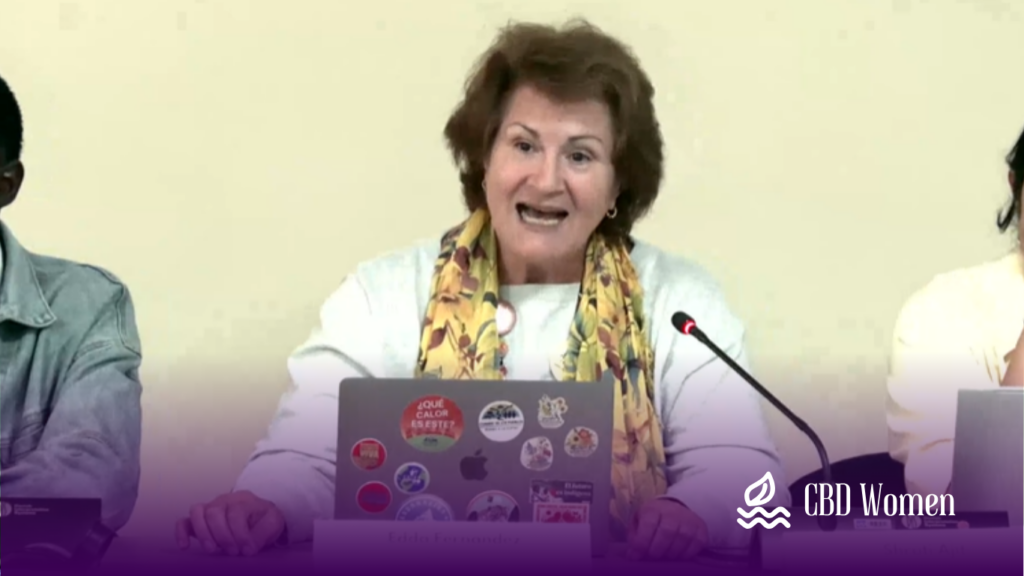
Turning to the Nagoya Protocol, Ms. Edda Fernandez answered the risk question directly: without Parties actually using and reporting on community protocols, communities are left exactly where they started — holding a document with no real pathway to fair benefit-sharing. The number of documented protocols has grown from four to forty-eight, she noted, but Parties still rarely reference or report on them in practice. She traced why this matters so specifically for gender: women sit at the center of these protocols in the first place, since they are so often the custodians of the traditional knowledge the protocols exist to protect. Her recommendation to the Conference of the Parties was pointed — urge, don’t merely invite, Parties to foster these protocols, and name women and youth explicitly as rights holders within them.
Ms. Sharon Onyango answered the question on digital sequence information directly: keeping women scientists, Indigenous women and women-led organizations from being left behind takes deliberate inclusion at every stage — capacity building that reaches these women directly, and post-implementation monitoring that actually checks whether benefits were shared equitably. She illustrated the stakes with the example of a grandmother’s medicinal plant knowledge — extracted, digitized, and eventually developed into new treatments — showing how easily Indigenous and scientific women’s contributions get folded into the system without ever being recognized by it.
Building the systems that make gender-responsiveness real
Mr. Timothy Mboya addressed technical and scientific cooperation, arguing that regional and subregional centres can only become gender-responsive through genuine co-creation rather than one-way knowledge transfer — capacity building designed with communities, not for them, and gender considerations mainstreamed from governance through to monitoring. «The biodiversity crisis cannot be solved without the people who protected these ecosystems,» he said, insisting they be included at every stage of the process, not consulted after the fact.
Closing the panel’s prepared remarks, Ms. Shruti Ajit turned to the proposed Global Plan of Action for Education on Biodiversity, arguing gender equality can’t sit in the plan’s guiding principles alone — it has to run through its objectives, financing, implementation and evaluation. Women, she said, are knowledge holders and educators in their own right, not simply beneficiaries, and reaching rural and underserved communities means confronting the structural barriers — including the unpaid domestic labor that keeps many girls out of school — that formal education systems tend to overlook. Her benchmark for success: monitoring that measures actual equity and inclusion, not just attendance.
From the floor
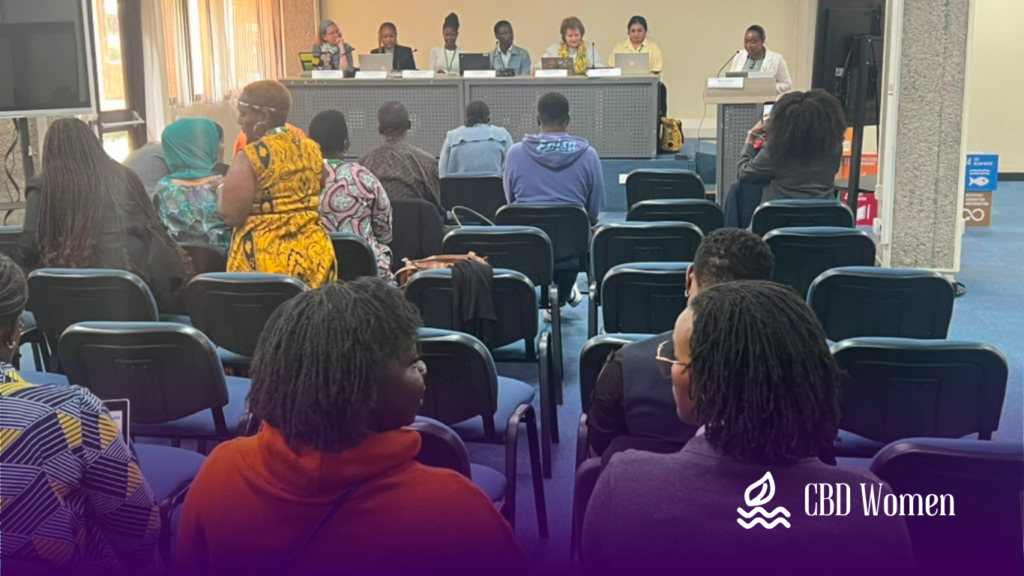
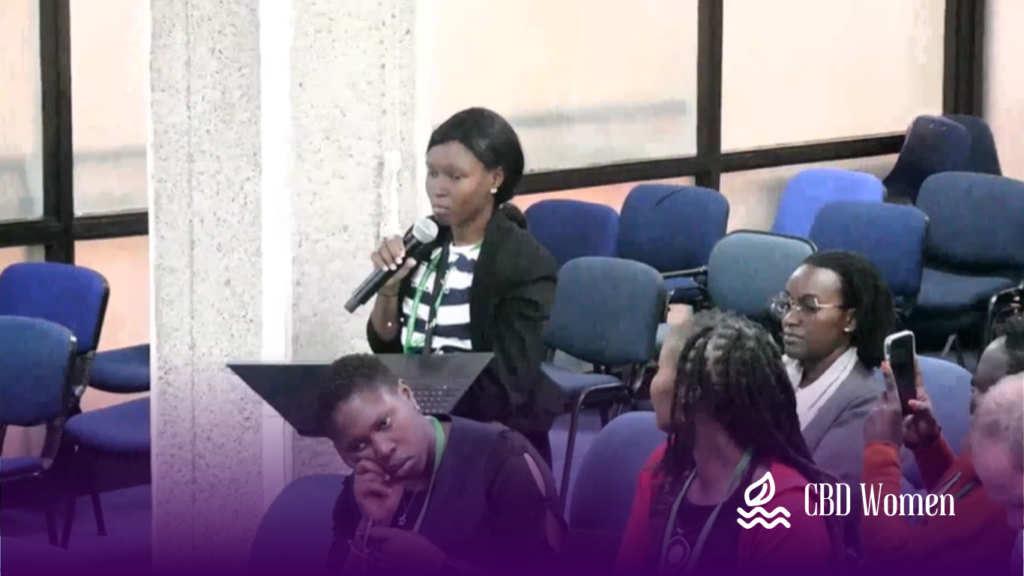
Journalists and civil society pressed the panel further. Ms. Josephine Matibbo challenged the near-total absence of disability from the conversation, noting that 1.6 billion people living with disabilities are rarely named alongside Indigenous people, local communities, women and youth in biodiversity texts panelists conceded that while Target 22 of the Framework does reference persons with disabilities, the provision goes largely undiscussed and needs far more advocacy.
Ms. Christine Karan asked how citizen science and digital tools could help capture traditional knowledge without exposing it to misappropriation across borders — panelists acknowledged that how benefits should be shared in such transboundary cases remains genuinely unresolved under the Nagoya Protocol’s multilateral mechanism, though any documentation, they stressed, must rest on informed consent and return benefit to the originating community. Ms. Rita, from the Republic of Congo, asked panelists to name one concrete indicator Parties could adopt to track whether biodiversity action actually benefits women and girls.
Several questions converged on the same frustration: commitments exist on paper, but support rarely reaches the local level. Denise, of the Global Youth Biodiversity Network, asked what’s blocking predictable, gender-responsive support from reaching subnational governments; one participant pointed to Kenya’s National Gender and Equality Commission as a model other countries could replicate for civil-society oversight. Mr. Milan Juma, co-founder of Freshwater Guardians, asked panelists to name the single commitment Parties should leave the meeting with, while Mr. Abraham Juma, of the Women Reducing Adolescent Pregnancy organization in Mombasa County, wanted to know what practical entry points exist for grassroots groups implementing the Nagoya Protocol. Panelists pointed to programmes like the Global Environmental Facility’s Small Grants Programme and its Inclusive Conservation Initiative — now grown to one hundred million dollars — as real, if bureaucratically demanding, options, while acknowledging that an intermediary is nearly always involved given how these funds are negotiated between Parties.
Key Messages
Asked for a single commitment heading into the Conference of the Parties, the panel’s answers converged on one idea: implementation, not new promises.
- Read the Global Review and the midterm review of the Gender Plan of Action together, not as separate processes.
- Move monitoring beyond tracking who showed up, toward following up on the outcomes participation actually delivered.
- Build accountability mechanisms that guarantee women’s meaningful participation in how biodiversity finance is governed and allocated.
- Move Parties past generic technical assistance and connect communities directly to the institutions that mobilize resources.
- Recognize that the CBD Women’s Caucus members are not observers in these processes; they are doers, and should be trusted to hold answers, not just asked to supply them.
📢Check out our full recommendations in English, French, Spanish, Arabic, and Portuguese: [LINK]