
By Ms. Priyanka Pandey, CBD Women’s Caucus member
Disclaimer: The views expressed in this blog are those of the author and do not necessarily reflect the official position or opinions of the CBD Women’s Caucus
As global efforts accelerate to implement the Kunming-Montreal Global Biodiversity Framework (KMGBF), decisions about biodiversity finance are becoming increasingly important. The Global Biodiversity Framework Fund (GBFF) was established to help translate biodiversity commitments into action, directing resources to countries, communities, and initiatives working to halt and reverse biodiversity loss.
The Sixth Meeting of the GBFF Council provided an important opportunity to assess progress, approve new investments, and discuss the future direction of biodiversity financing. For the CBD Women’s Caucus, participation in these discussions was essential to ensure that gender equality, women’s leadership, and inclusive governance remain at the heart of biodiversity action.
Women are not only stewards of biodiversity and natural resources; they are leaders, knowledge holders, innovators, and rights holders. Ensuring that biodiversity finance recognizes and supports these roles is critical to achieving both biodiversity and social justice outcomes. Through its participation at the Council meeting, the CBD Women’s Caucus sought to advance these priorities and contribute to discussions on equitable, accountable, and inclusive biodiversity finance.
About the Event
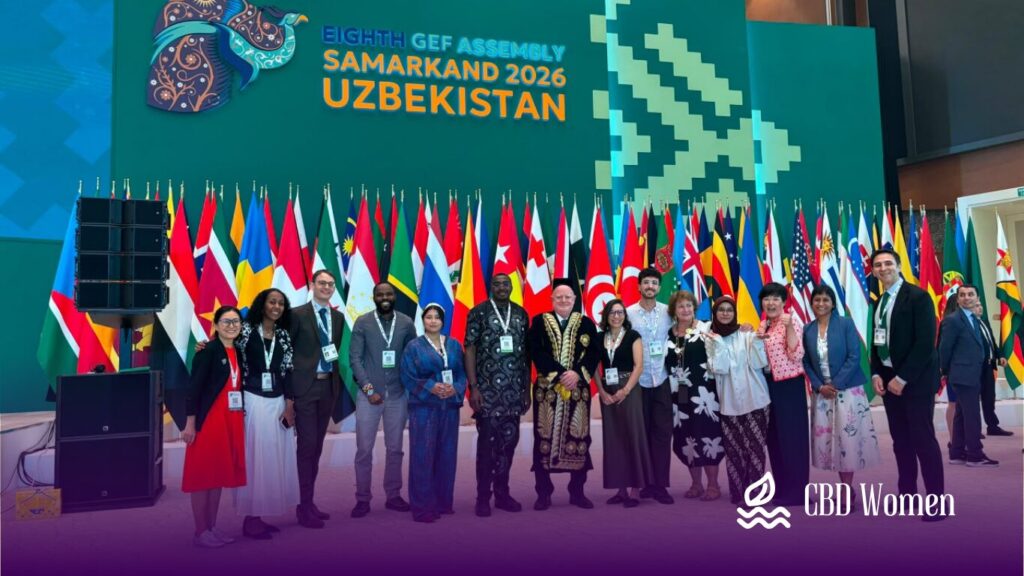
The Sixth Meeting of the Council of the Global Biodiversity Framework Fund (GBFF) held between June 2 and 3 in Samarkand, Uzbekistan, brought together representatives from donor and recipient governments, the Global Environment Facility (GEF) Secretariat, implementing agencies, Indigenous Peoples and Local Communities (IPLCs), civil society organizations, youth representatives, and other stakeholders.
The Council considered a broad range of issues, including approval of new biodiversity projects, the Fund’s administrative budget, a new resource mobilization strategy, progress in achieving portfolio-level targets, engagement with international financial institutions, and findings from the second formative evaluation of the GBFF.
A recurring theme throughout the meeting was how to ensure that biodiversity finance reaches those most directly involved in conserving biodiversity while remaining accountable, inclusive, and responsive to local realities. Discussions on Indigenous Peoples’ rights, community-led conservation, stakeholder participation, and governance resonated strongly with the priorities of the CBD Women’s Caucus.
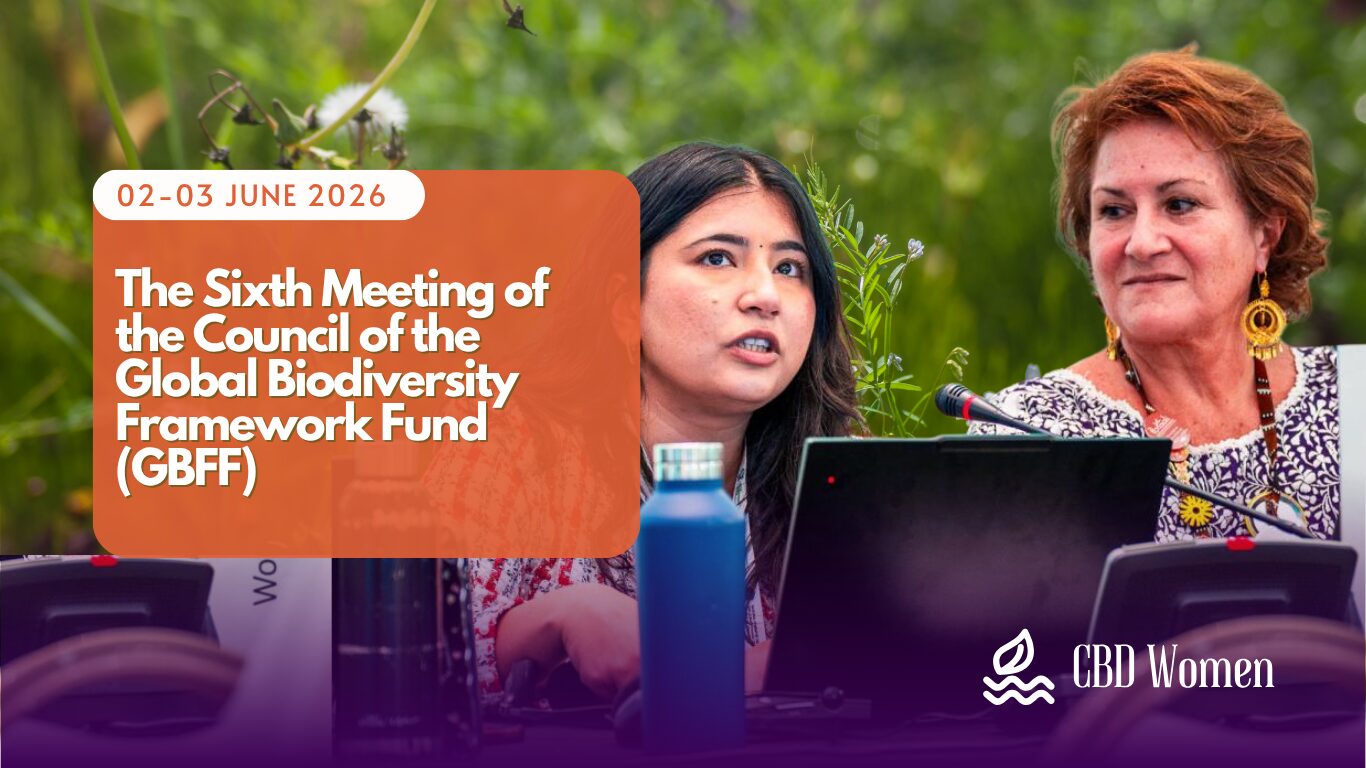
The CBD Women’s Caucus was represented by Ms. Priyanka Pandey from Nepal and Edda Fernandez Luiselli from Mexico. Ms. Priyanka, who participated on behalf of the CBD Women’s Caucus, brings expertise in gender justice, social inclusion, and biodiversity policy. Throughout the meeting, she engaged in discussions related to project design, governance processes, and stakeholder participation.
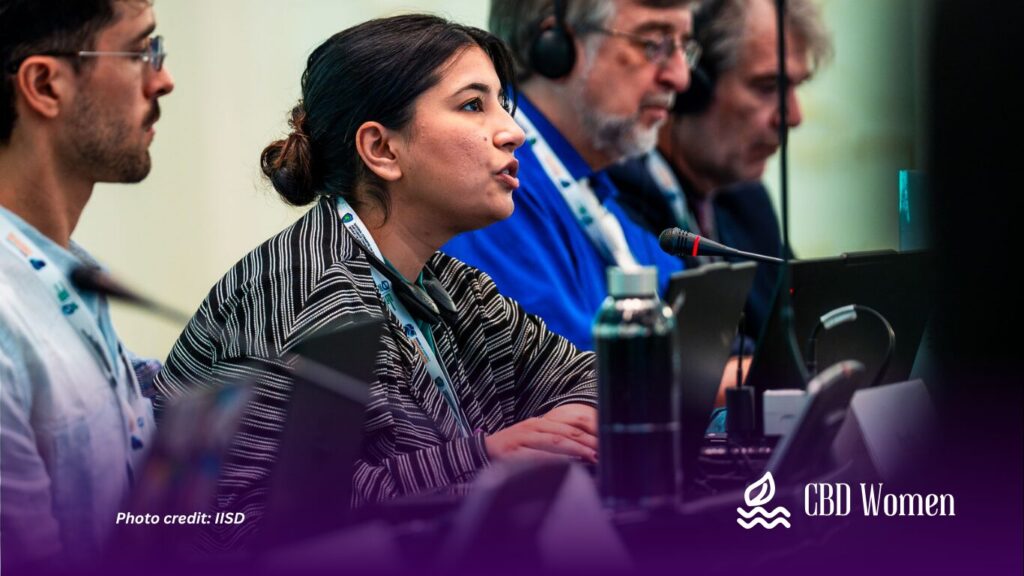
During discussions on the GBFF Work Program, Ms. Priyanka emphasized the need to move beyond treating gender analysis and gender mainstreaming as standalone project activities. Instead, she called for stronger recognition of women’s leadership, agency, and equitable participation throughout biodiversity initiatives. She also advocated for enhanced opportunities for observers to contribute to project review processes, strengthening transparency and accountability within the Fund.
Ms. Edda Fernandez Luiselli represented the CBD Women’s Caucus and contributed perspectives grounded in extensive experience in environmental governance, biodiversity policy, and gender advocacy. She supported efforts to strengthen inclusive participation and ensure that women’s voices and expertise are reflected in biodiversity financing mechanisms.
Together, the representatives reinforced a central message of the Caucus: women must be recognized as partners in biodiversity governance, implementation, and decision-making and not merely as beneficiaries of projects.
Event Highlights and Key Discussions
New Biodiversity Investments Approved
The Council approved a new Work Program consisting of two projects in India and Papua New Guinea, totaling approximately USD 20 million. Both projects include strong engagement with Indigenous Peoples and Local Communities and are expected to deliver biodiversity, governance, and livelihood benefits.
Council members widely welcomed the projects, noting their contributions to community-based conservation and social inclusion. Discussions highlighted the importance of ensuring that local communities are not only beneficiaries but active participants in project governance and implementation.
Advocating for Women’s Leadership
The CBD Women’s Caucus welcomed continued attention to gender responsiveness across the GBFF portfolio. However, the Caucus stressed that gender equality should not be limited to conducting gender analyses or fulfilling procedural requirements.
The Caucus called for a shift toward approaches that actively support women’s leadership, decision-making power, and equitable participation. This includes ensuring that women influence project priorities, implementation strategies, and governance structures from the earliest stages of project development.
Later in the meeting, during discussions on the formative evaluation of the GBFF, the CBD Women’s Caucus reiterated that women must be recognized as partners in both decision-making and implementation. This message reinforced the importance of moving from participation toward genuine leadership and shared governance.
Strengthening Observer Participation
A key intervention from the CBD Women’s Caucus focused on the role of observers in GBFF processes. The Caucus called for stronger and more institutionalized opportunities for observers to provide inputs during project review and approval processes.
Meaningful stakeholder participation strengthens transparency, accountability, and project quality. While the Secretariat acknowledged these concerns, it noted that expanding observer participation in project reviews would require amendments to the existing project cycle policy.
The discussion highlighted broader questions about how biodiversity finance mechanisms can better incorporate the perspectives and expertise of civil society, women’s organizations, Indigenous Peoples, youth, and other rights holders.
Resource Mobilization and the Future of Biodiversity Finance
One of the most significant topics before the Council was the adoption of a Resource Mobilization Strategy for 2026–2030.
The Council heard that more than USD 387 million has been mobilized since the GBFF was launched in 2023, with over 90 percent of available resources already programmed. As a result, securing new contributions has become an urgent priority.
Council members discussed expanding support from sovereign governments, subnational governments, philanthropic organizations, and private sector actors. While many welcomed efforts to diversify funding sources, numerous participants stressed that private and philanthropic resources should complement—not replace—public commitments to biodiversity finance.
The discussions also emphasized the need for strong safeguards, accountability mechanisms, and respect for the rights and priorities of recipient countries and communities.
Learning from the GBFF’s First Years
The Independent Evaluation Office presented the Second Formative Evaluation of the GBFF, which found strong demand for funding, successful early resource mobilization, and progress in meeting portfolio-level targets.
At the same time, the evaluation identified opportunities to improve monitoring systems, strengthen feedback to project proponents, diversify the donor base, and enhance reporting on whole-of-society participation and governance outcomes.
For the CBD Women’s Caucus, these findings underscore the importance of measuring not only who participates in biodiversity governance processes, but also whether that participation influences decisions and outcomes.
Outcomes and Next Steps
The Sixth GBFF Council concluded with the approval of the new Work Program, the 2027 administrative budget, and the Resource Mobilization Strategy for 2026–2030.
The meeting demonstrated that the GBFF has made significant progress since its establishment, including exceeding portfolio targets related to Indigenous Peoples and Local Communities and rapidly delivering resources to countries and communities. At the same time, important questions remain regarding long-term financing, governance, stakeholder engagement, and equitable participation.
Moving forward, the CBD Women’s Caucus will continue to advocate for:
- Women’s leadership and decision-making across biodiversity initiatives;
- Stronger gender-responsive and gender-transformative approaches in project design and implementation;
- Meaningful participation of observers and civil society in biodiversity finance governance;
- Accountability mechanisms that ensure biodiversity finance benefits communities and rights holders; and
- Inclusive implementation of the Kunming-Montreal Global Biodiversity Framework.
As biodiversity finance continues to evolve, the CBD Women’s Caucus remains committed to ensuring that women’s voices, knowledge, and leadership help shape the decisions that will determine the future of biodiversity and the communities that depend on it.
We invite partners, advocates, and supporters to follow our work and join us in advancing a more inclusive, equitable, and gender-responsive approach to biodiversity conservation and finance.