
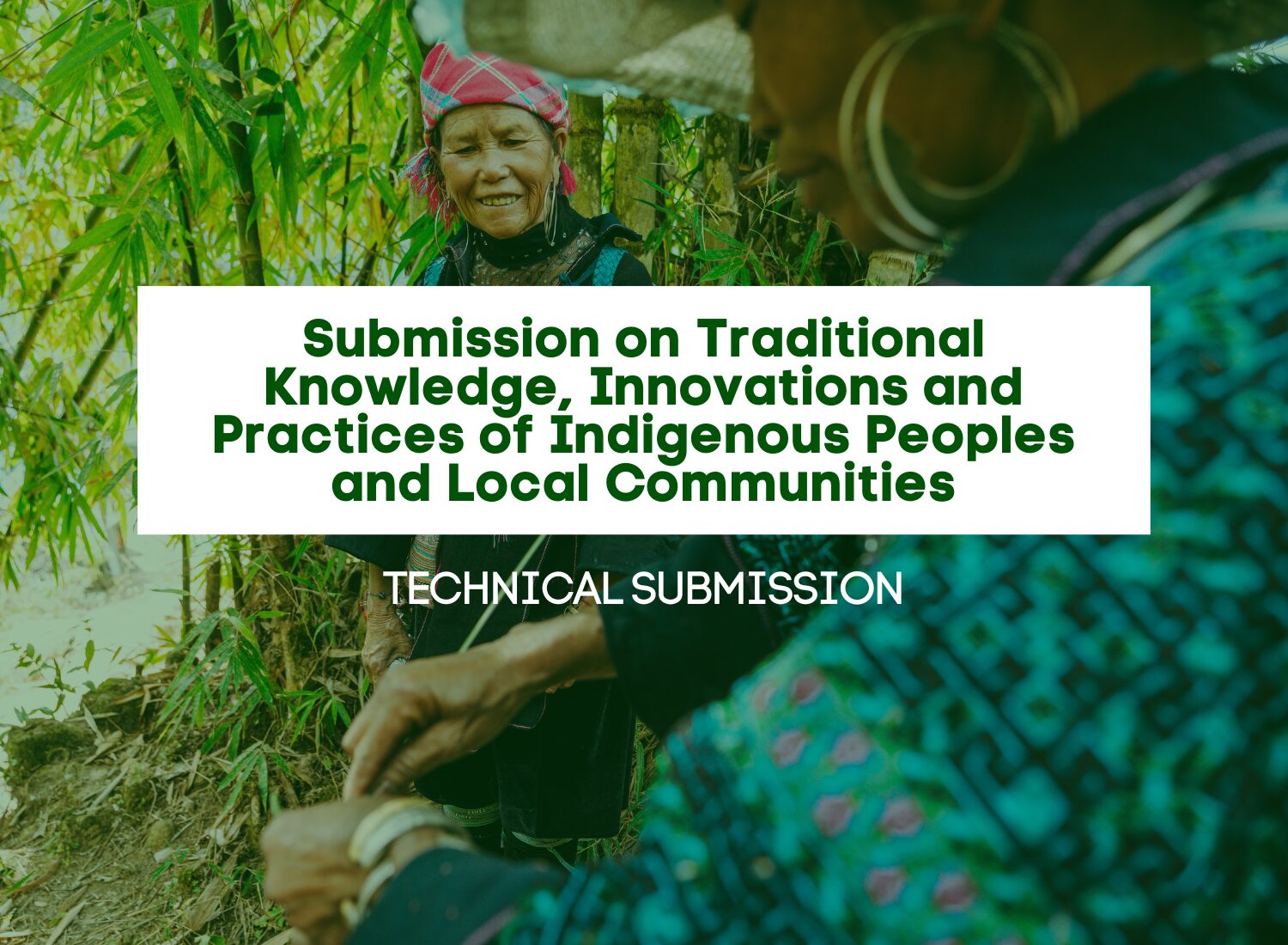
The CBD Women’s Caucus submitted case studies and information to the CBD Secretariat documenting how women from indigenous and local communities are driving biodiversity action on the ground — and what the global report on KM-GBF collective progress must reflect.
The submission draws on contributions from member organisations across Africa, Asia-Pacific and Latin America, covering 12 case studies from Indonesia, Rwanda, Chile (Rapa Nui), Mali and Cameroon. Each case study demonstrates how women’s traditional knowledge, leadership, and ecological stewardship directly contribute to KM-GBF implementation.
From seed banking in Mali to agrobiodiversity markets in Borneo, beekeeping cooperatives near Rwanda’s Volcanoes National Park, indigenous territorial governance in Rapa Nui, and traditional fishery management in Cameroon — these are not token examples. They are evidence of women as rights holders, knowledge holders and leaders.
The submission also outlines the CBD Women’s Caucus’ own activities to engage, involve and support indigenous peoples and local communities, including through the Gender & Biodiversity Data Initiative (with IIED), advocacy on biodiversity finance, and constituency coordination ahead of CBD meetings.
Year: 2025
Type: Technical Submission
Authors: CBD Women’s Caucus
Themes: Traditional Knowledge · Indigenous Peoples & local communities · Women’s Leadership · GBF Implementation · GBF Monitoring & Reporting · Target 23 · Gender Plan of Action · Agrobiodiversity · NBSAPs